


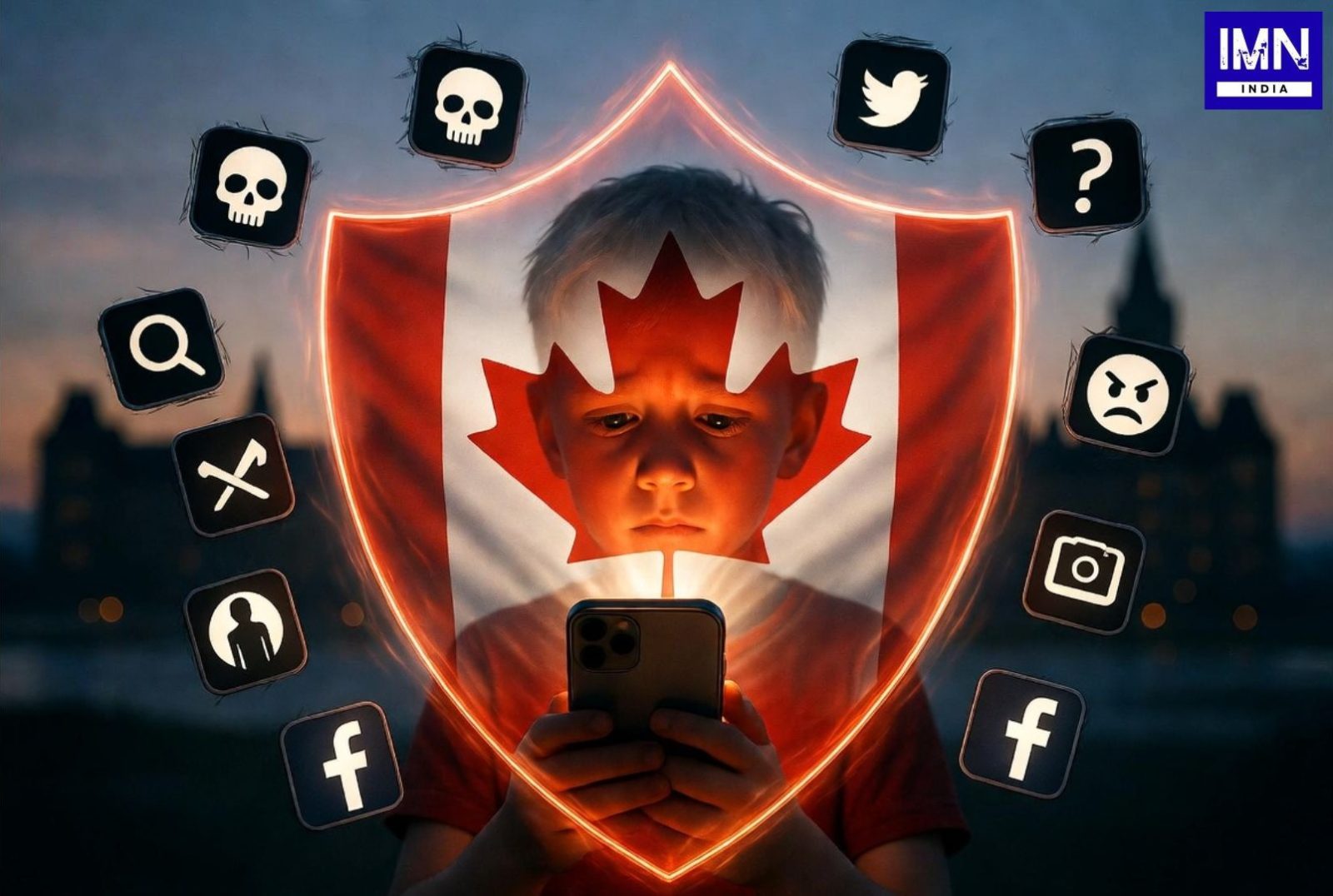
Canada Safe Social Media Act Introduced in Parliament
Canada has introduced landmark legislation to make social media platforms and artificial intelligence chatbots safer for children, with the government tabling the Safe Social Media Act, also known as Bill C-34, in Parliament on Tuesday.
The Canada Safe Social Media Act represents one of the most comprehensive attempts by any government to regulate digital platforms in the interest of child safety, introducing a minimum age of 16 for social media accounts, mandatory risk identification and mitigation requirements for platforms, and an independent Digital Safety Commission to enforce compliance.
The Canada Safe Social Media Act has been introduced at a time when Canadian health professionals, child protection advocates, and parents have been raising the alarm about the growing mental health crisis among young people, which many experts link directly to unregulated social media use and exposure to harmful content online. Minister of Canadian Identity and Culture Marc Miller, who introduced the Bill, said children’s safety cannot be an afterthought and that the legislation will require platforms to be safe by design from the ground up.
Canada Safe Social Media Act: What the Legislation Proposes
The Canada Safe Social Media Act introduces a new legislative and regulatory framework through a Digital Safety Act that will apply to social media services, user-uploaded livestreaming and adult content services, and certain AI chatbot services. The framework operates through three core duties that all regulated services will be required to fulfil.
The Duty to Protect Children will apply to all regulated services under the Act and is the centrepiece of the Canada Safe Social Media Act. It includes an age restriction preventing children under the age of 16 from having accounts on social media services, with a pathway for platforms to seek an exemption if they can demonstrate that sufficient safeguards for children are already in place.
The Duty to Act Responsibly will require social media services to assess and reduce risks associated with seven specific categories of harmful content. These are content that sexually exploits a child or revictimises a survivor, intimate content communicated without consent including deepfake sexual images, content that induces a child to self-harm, content used to bully a child, content that promotes hatred, content that incites violence, and terrorism or violent extremism content. Services will also be required to apply labels to synthetically generated content, maintain accessible user guidelines, and provide clear tools for users to flag harmful material and block other users.
The Duty to Make Certain Content Inaccessible will require the rapid removal of child sexual exploitation material and non-consensual intimate imagery, including AI-generated deepfake sexual content. Services will be required to act swiftly once such content is identified or flagged, with no tolerance for delays in taking down material that directly victimises individuals.
AI chatbot services will be subject to their own version of the Duty to Act Responsibly, requiring them to reduce the risk of the chatbot communicating harmful content, be transparent about their reporting protocols in crisis situations such as when a user indicates intent to harm themselves or others, and actively mitigate the risk of engaging in harmful behaviour.
Canada Safe Social Media Act: Why Now
The Canada Safe Social Media Act has been introduced against a backdrop of deeply concerning data about the scale and acceleration of online harm affecting Canadian children. Police services across Canada reported 16,905 incidents of online child sexual exploitation in 2024, a staggering rise of 347 per cent since 2014. In 2019, one in four young Canadians aged 12 to 17 reported experiencing cyberbullying in the previous year, and research consistently links online victimisation to serious mental health consequences including depression, anxiety, and suicidal ideation.
Canadian Health Minister Marjorie Michel said social media platforms and AI chatbots are designed to capture attention and do not support healthy childhood development, describing them as a source of anxiety, isolation, depression, and a range of other mental health challenges for many young Canadians. She added that healthy childhood development is grounded in strong in-person social connections, and that the legislation will provide a safer environment for young Canadians and empower them to connect in person, build friendships, and focus in school.
Dr Charlotte Moore Hepburn of SickKids hospital described the Canada Safe Social Media Act as a critical and welcome step, noting that paediatricians across Canada are witnessing rising rates of anxiety, depression, self-harm, and disordered eating linked not just to harmful content but to platform features deliberately engineered to maximise engagement rather than protect users.
Minister of Artificial Intelligence and Digital Innovation Evan Solomon said clear rules are needed that protect children, build trust, and hold companies accountable as social media, digital platforms, and AI technologies play a growing role in how Canadians connect, learn, and communicate.
The Digital Safety Commission of Canada
The Canada Safe Social Media Act proposes the establishment of a new independent Digital Safety Commission of Canada to administer the framework and enforce compliance. The Commission will have broad enforcement powers including the ability to conduct audits, issue compliance orders, and impose financial penalties on services that fail to meet their statutory obligations under the Act.
It will also collect and process user complaints about content that falls within the Duty to Make Certain Content Inaccessible when the responses from the social media service itself are insufficient, providing users with a direct and credible route of recourse beyond the platforms themselves.
Additionally, the Commission will conduct research on global best practices, assess regulated services’ publicly disclosed Digital Safety Plans, provide guidance to platforms on how to mitigate risks effectively, and develop educational resources for the Canadian public on online safety. The establishment of an independent regulator with real enforcement powers is one of the most significant structural features of the legislation, addressing a long-standing criticism that previous voluntary frameworks lacked teeth.
What the Canada Safe Social Media Act Means for Platforms and Global Regulation
The Canada Safe Social Media Act positions Canada as a significant player in the growing global movement to regulate social media platforms in the interest of children and public safety. Australia passed landmark legislation in 2024 banning children under 16 from social media entirely, and several European countries have moved to enforce stricter platform accountability under the EU’s Digital Services Act.
For platforms operating in Canada, the new law will require significant changes to how they design their products, manage harmful content, verify user ages, and handle safety complaints, particularly for younger users. The legislation makes clear that self-regulation has failed and that governments are prepared to impose legally binding obligations on platforms that have for too long treated child safety as secondary to growth and engagement metrics.
Lianna McDonald of the Canadian Centre for Child Protection described the tabling of the Canada Safe Social Media Act as a historic day that could turn the tide on the accelerating trajectory of online harm against children. She noted that the urgency is undeniable, that too many lives have already been affected, and that the legislation’s recognition of childhood as a finite and vulnerable period demanding protection rather than exploitation is long overdue.
Follow for more updates: www.instagram.com/imnindia.news/














Leave a comment