


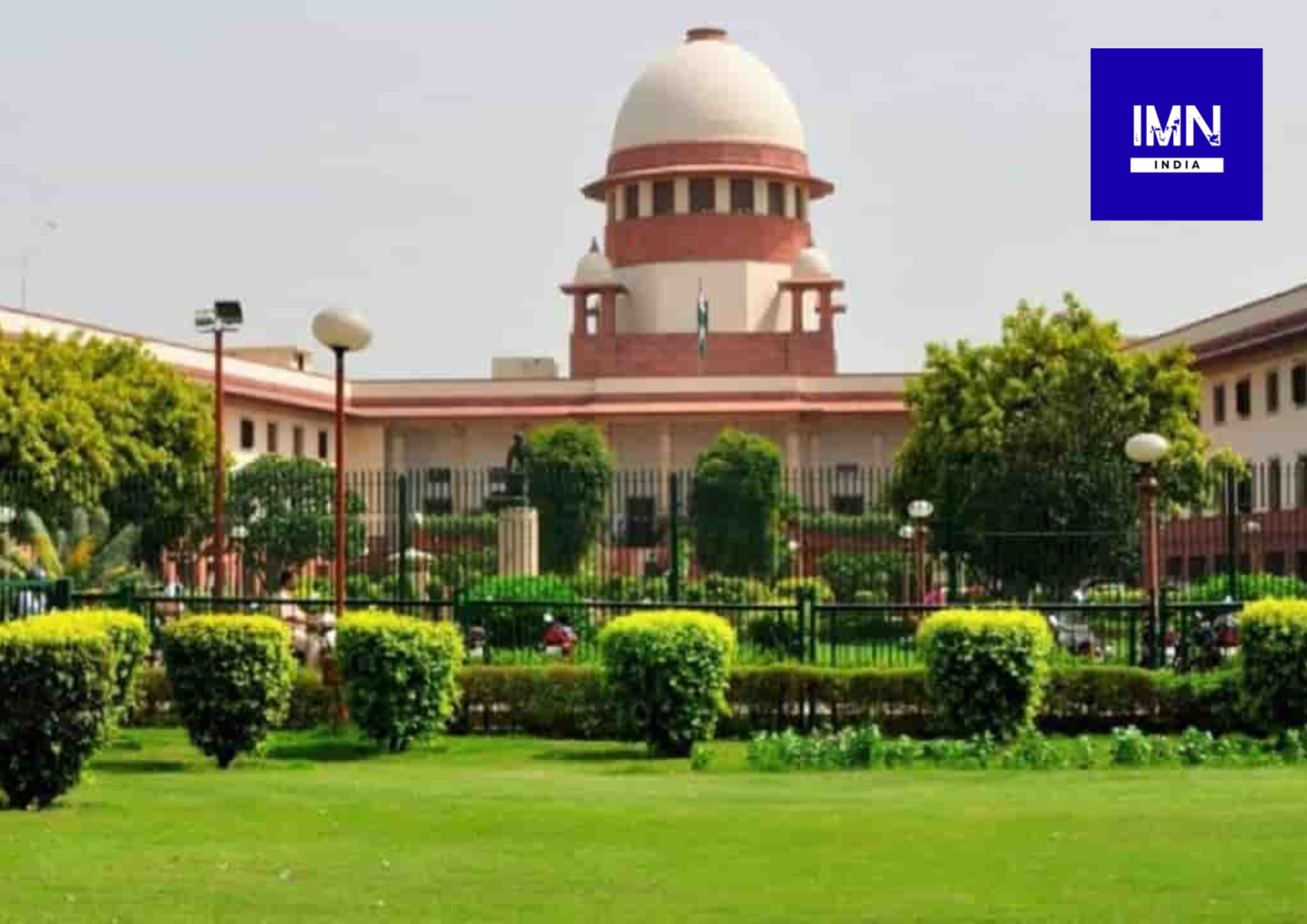
In a significant development concerning the Judicial Officers Retirement Age, the Supreme Court on Tuesday directed all States and Union Territories to consider increasing the retirement age of judicial officers from 60 to 61 years. The apex court said the decision should be taken by state governments in consultation with their respective High Courts, with the revised age taking effect from April 1, 2026, if approved.
The direction was issued by a Bench comprising Chief Justice Surya Kant, Justice Joymalya Bagchi, and Justice V. Mohana while hearing a petition seeking a uniform enhancement of the retirement age of district judiciary judges from 60 to 62 years across the country. The court clarified that the present order is an interim arrangement and will not affect the final decision on the broader legal issue.
States Asked to Decide in Consultation With High Courts
The Supreme Court directed every State Government and Union Territory administration to hold consultations with the jurisdictional High Court before deciding the Judicial Officers Retirement Age.
The Bench observed that if a State or UT agrees to enhance the retirement age, eligible judicial officers will be allowed to continue in service up to 61 years. However, such continuation will remain subject to the outcome of the pending proceedings before the Supreme Court.
The court emphasised that the interim arrangement should not be interpreted as a final ruling on whether the retirement age should ultimately be increased to 62 years across the country.
Interim Relief to Take Effect From April 1, 2026
The Bench directed that any decision by States to increase the retirement age would become operational from April 1, 2026. The judges noted that this interim measure is intended to maintain continuity in judicial administration while the constitutional and legal questions surrounding a uniform retirement policy are examined.
The court also made it clear that judicial officers continuing in service under this arrangement would do so without prejudice to the final verdict in the case.
Petition Seeks Uniform Retirement Age Across India
The matter before the Supreme Court concerns demands for a uniform retirement age for district judiciary judges across all States and Union Territories. At present, the retirement age of judicial officers is generally 60 years in several states, though service conditions differ depending on state rules and recommendations accepted by individual governments.
The petitioners have argued that increasing the retirement age would help retain experienced judges, reduce vacancies in subordinate courts and strengthen the justice delivery system by ensuring greater continuity in judicial functioning.
Long-Standing Demand for Judicial Reforms
The issue of the Judicial Officers Retirement Age has been discussed for several years as part of broader judicial reforms aimed at improving the efficiency of India’s court system. Various judicial bodies and legal experts have pointed out that subordinate courts continue to face a large number of vacancies and mounting case pendency, making the retention of experienced judges an important administrative consideration.
In previous discussions, stakeholders have argued that extending the service period of judicial officers could help address manpower shortages while providing additional time for experienced judges to contribute to the justice delivery mechanism. At the same time, others have maintained that any such decision should be carefully balanced with opportunities for fresh judicial appointments.
Retirement Age Varies Across Different Levels of Judiciary
Under the existing constitutional framework, Supreme Court judges retire at the age of 65 years, while High Court judges retire at 62 years. District judiciary officers, however, continue to follow retirement rules framed by individual States, resulting in variations in service conditions.
The petition before the apex court seeks greater uniformity in these service conditions by advocating a common retirement age for judicial officers across the country.
Final Decision Still Pending
The Supreme Court clarified that the interim direction does not amount to a final adjudication on the issue. The larger question of whether the Judicial Officers Retirement Age should be uniformly increased from 60 to 62 years nationwide will be decided after detailed consideration of legal, constitutional and administrative aspects.
The court’s latest direction is expected to initiate consultations between State Governments and High Courts in the coming months. Their decisions could have a significant impact on the functioning of subordinate courts, judicial vacancies and the overall efficiency of the country’s justice delivery system from April 2026 onward.
Also read: CJP Suspends Fresh Parliament March After Violent Crackdown, Protest Continues at Jantar Mantar
Follow for more updates: www.instagram.com/imnindia.news/













Leave a comment