


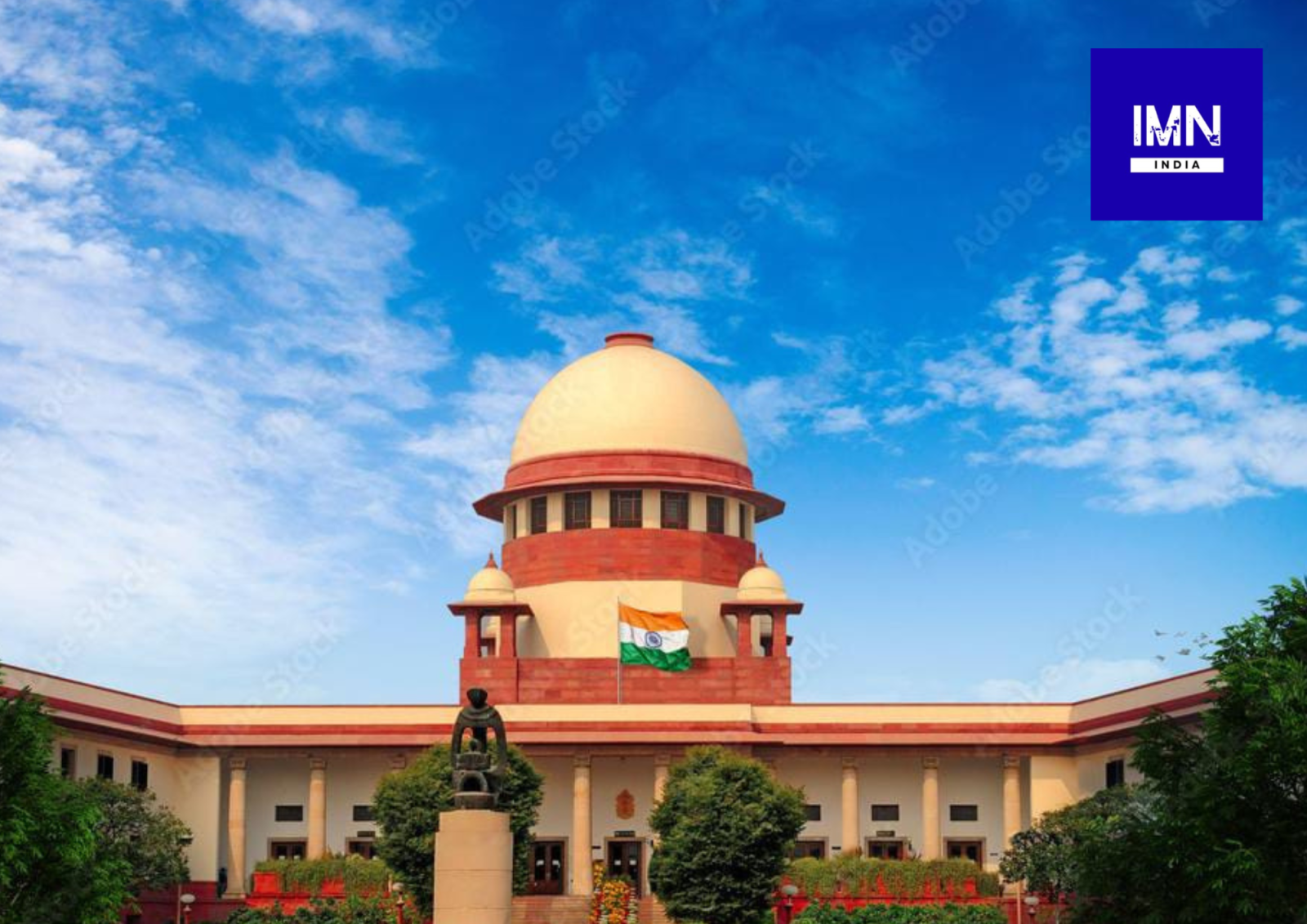
The Lok Sabha on Monday passed the Supreme Court Judges Amendment Bill 2026, paving the way for an increase in the sanctioned strength of judges in the Supreme Court from 33 to 37, excluding the Chief Justice of India. The government said the move is aimed at reducing the mounting backlog of cases and ensuring faster delivery of justice across the country.
The Bill amends the Supreme Court (Number of Judges) Act, 1956 and replaces an ordinance promulgated by President Droupadi Murmu in May this year, which had already provided for the increase in the number of judges. The legislation now seeks to give statutory backing to that decision.
Government Says More Judges Will Speed Up Justice
Introducing the Supreme Court Judges Amendment Bill 2026, Union Law and Justice Minister Arjun Ram Meghwal said the legislation is part of the government’s broader judicial reform agenda under the vision of “Reform, Perform and Transform.”
He said the increase in the number of judges has become necessary because of the continuous rise in litigation before the Supreme Court. According to the minister, expanding the court’s judicial strength will improve efficiency, enhance case disposal and strengthen citizens’ access to timely justice.
The government maintained that increasing judicial capacity is one of the most practical measures to deal with the growing workload of the country’s highest court.
Over 92,000 Cases Pending in Supreme Court
The decision comes against the backdrop of a steadily increasing pendency of cases in the Supreme Court.
Official data presented during the debate showed that more than 92,000 cases were pending before the apex court as of January 1, 2026. Despite functioning with nearly its full sanctioned strength of 34 judges since 2019, the court continues to face a widening gap between fresh case registrations and case disposal.
During the previous year, the Supreme Court received 75,410 new cases, while disposing of more than 65,000 matters. Although disposal rates remain among the highest in recent years, fresh filings continue to outpace judgments, leading to a persistent backlog.
Legal experts have repeatedly pointed out that increasing the judge strength, along with technological reforms and procedural improvements, is essential for reducing pendency and ensuring timely hearings.
Why the Amendment Was Needed
The Supreme Court (Number of Judges) Act, 1956 has been amended several times over the decades to meet the growing demands on India’s judicial system.
The sanctioned strength of Supreme Court judges has gradually increased in response to rising litigation, expanding constitutional responsibilities and the growing complexity of legal disputes. The last major increase came in 2019, when Parliament raised the sanctioned strength from 30 to 33 judges, excluding the Chief Justice of India.
However, continued growth in case filings, particularly constitutional matters, commercial disputes and public interest litigation, prompted the government to propose another expansion in 2026.
The latest amendment seeks to provide the Supreme Court with greater judicial capacity to hear cases more efficiently while enabling the constitution of additional Constitution Benches and larger benches whenever required.
Other Bills Introduced in Lok Sabha
Apart from the Supreme Court Judges Amendment Bill 2026, the Lok Sabha also witnessed the introduction of two other important legislations.
Union Minister Rao Inderjit Singh introduced the Indian Statistical Institute Bill, 2026, which seeks to establish a comprehensive statutory framework for the Indian Statistical Institute and strengthen its role as a globally recognised centre for statistical sciences and allied disciplines.
Finance Minister Nirmala Sitharaman also introduced the Bankers’ Books Evidence Bill, 2026, aimed at modernising laws relating to banking records and aligning legal provisions with contemporary digital banking practices.
Opposition Protest Disrupts Proceedings
Proceedings in the Lok Sabha were marked by repeated disruptions as Opposition members protested over the alleged police action during recent student demonstrations related to the NEET examination controversy.
Members entered the Well of the House carrying placards and demanded a response from Union Home Minister Amit Shah regarding the alleged police action against protesting students.
Speaker Om Birla repeatedly appealed to members to maintain parliamentary decorum and allow legislative business to continue. Despite his appeals, the House witnessed multiple adjournments before legislative business resumed later in the afternoon.
Earlier in the day, the Speaker congratulated Indian athletes for their impressive performance at the 23rd Commonwealth Games, where India secured 39 medals, including 13 gold, 17 silver and 9 bronze, finishing fourth in the medal standings. He also noted that the Commonwealth Games baton had officially been handed over to India, with Ahmedabad set to host the 2030 Commonwealth Games.
What the Amendment Means
The passage of the Supreme Court Judges Amendment Bill 2026 marks another significant step in India’s ongoing judicial reform process. By increasing the sanctioned strength of judges to 37, the government aims to improve judicial efficiency, reduce delays in case hearings and strengthen public confidence in the justice delivery system.
While experts believe that increasing judicial capacity alone may not eliminate pendency, the amendment is expected to provide much-needed relief to the Supreme Court as it continues to deal with an ever-growing volume of litigation. Combined with procedural reforms, digital court initiatives and better case management, the expanded bench strength could play an important role in ensuring faster access to justice for citizens across the country.
Also read: Shehzad Poonawalla Resigns from BJP? X Bio Change Fuels Political Speculation
Follow for more updates: www.instagram.com/imnindia.news/














Leave a comment