


New Delhi: The Delhi High Court on Tuesday declined to entertain a plea seeking judicial intervention over allegations of excessive force used against students during recent protests. The Bench observed that the court should not be drawn into matters already being examined by the appropriate authorities.
“Don’t drag us into it,” the Bench remarked while hearing the petition.
The High Courts across the country routinely exercise discretion in deciding whether to entertain writ petitions, particularly in cases where statutory remedies already exist. Courts often prefer that grievances first be routed through the appropriate administrative or investigative channels before invoking constitutional jurisdiction, reserving direct intervention for cases involving a clear and demonstrable violation of legal rights.
Delhi High Court Plea Seeks Probe Into Police Force on Students
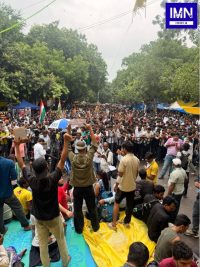
The plea had alleged that law enforcement personnel used unnecessary force while dispersing protesting students. It sought directions for an independent inquiry into the incident.
The petitioners also requested the court to issue guidelines ensuring that students exercising their right to protest are not subjected to excessive police action in the future.
The Court Questions Maintainability of Petition
During the hearing, the Delhi High Court questioned the maintainability of the petition, noting that legal remedies were already available under existing laws.
The Bench observed that the judiciary could not interfere in every administrative matter unless there was a clear legal basis for doing so. It indicated that allegations regarding police conduct should first be examined through the appropriate statutory mechanisms.
The court further noted that the petition appeared to seek a broad examination of administrative actions without placing sufficient material on record to justify judicial intervention at this stage. It emphasised that constitutional courts cannot be converted into forums for addressing every grievance arising from law-and-order situations unless a specific violation of legal rights is established.
Petitioners’ Arguments
Counsel appearing for the petitioners argued that the students were peacefully protesting when force was allegedly used against them.
They maintained that an impartial investigation was necessary to determine whether the police response was proportionate to the situation on the ground.
The plea also highlighted broader concerns about safeguarding the democratic right to peaceful protest, while at the same time acknowledging the need to maintain public order during demonstrations.
Court’s Final Observations
The Bench reiterated that the High Court was not inclined to intervene in the matter at this stage. It advised the petitioners to pursue remedies available under the law before the competent authorities.
The judges made it clear that the court would not assume the role of an investigating authority in matters where established legal procedures already exist. Such matters, the Bench indicated, are better suited to statutory bodies equipped to examine specific allegations of police conduct in detail.
Delhi High Court Disposes of Student Protest Plea
Following these observations, the matter was disposed of. The High Court left it open to the petitioners to approach the appropriate forum in accordance with law if they wished to pursue their grievances further.
The court did not express any opinion on the merits of the allegations made in the petition.
Cases involving allegations of police excess during protests often see courts weighing individual grievances against the broader principle of judicial restraint in administrative matters, particularly where legal remedies remain unexhausted. The Delhi High Court’s approach in this instance reflects that established judicial posture, leaving the door open for the petitioners to seek redress through the appropriate legal channels rather than direct court intervention.
Follow for more updates: www.instagram.com/imnindia.news/










Leave a comment