


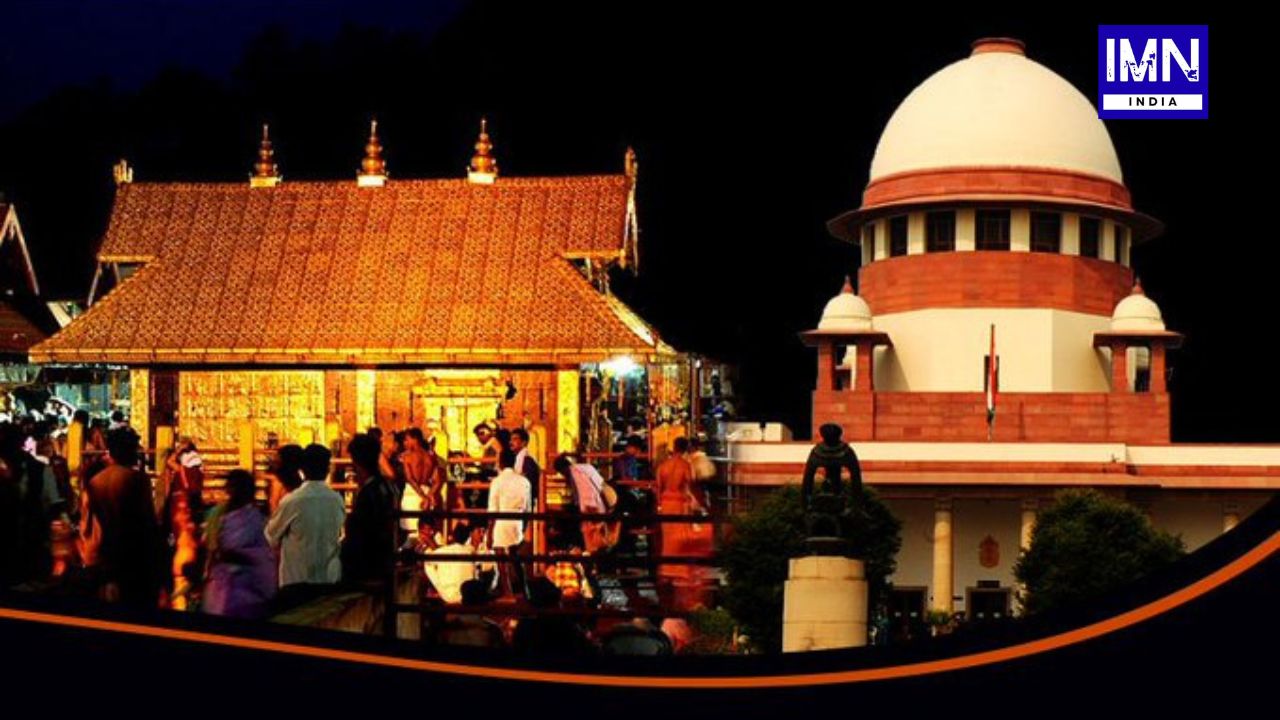
The long-running legal battle surrounding the Sabarimala Temple witnessed intense arguments once again, as senior advocate J Sai Deepak strongly opposed what he termed as “indirect state interference” in religious practices.
Appearing before a Constitution Bench of the Supreme Court of India, Sai Deepak argued that the State cannot regulate or influence practices that are considered sacred by devotees, even indirectly, as doing so would amount to a “constitutional overreach.”
⚖️ “Sacred Practices Cannot Be Touched”
During the hearing, the advocate emphasized that religious traditions derive their legitimacy from the faith of followers, not from state approval.
He argued that any attempt by the State to reshape or reinterpret such practices—whether directly or through regulatory mechanisms—would violate the constitutional protection granted to religious freedom.
According to him, the Constitution does not empower the State to act as an arbiter of what constitutes a valid or acceptable religious practice.
🏛️ Court Focuses on Judicial Review
The bench, led by Chief Justice Surya Kant, shifted the focus to the broader constitutional question—the scope and limits of judicial review in matters of faith.
The judges indicated that while courts have the authority to examine laws and practices, the challenge lies in balancing:
- Fundamental rights
- Religious autonomy
- Constitutional morality
The bench’s observations suggest that the court is carefully weighing how far it can go in intervening in religious matters without infringing on deeply held beliefs.
📌 Core Constitutional Questions
The ongoing hearings are addressing several critical issues, including:
- Can the State or courts regulate religious customs?
- What qualifies as an “essential religious practice”?
- Can non-believers challenge the traditions of a religion?
- Where should the line be drawn between reform and interference?
These questions are central not just to the Sabarimala case but to the broader interpretation of religious freedom under the Constitution.
🔥 Why This Case Matters
The Sabarimala issue has become one of India’s most significant constitutional debates, sitting at the intersection of faith, gender rights, and judicial authority.
Previous rulings had opened the temple to women of all age groups, triggering widespread protests and legal challenges from various groups who argued that the tradition is integral to the temple’s identity.
The current proceedings before a larger bench aim to settle these complex questions with greater constitutional clarity.
📊 What Lies Ahead
As arguments continue, the Supreme Court is expected to deliver a judgment that could redefine the relationship between:
- Religion and the State
- Courts and faith-based traditions
- Individual rights and collective belief systems
The verdict will likely have far-reaching implications for similar disputes across the country.















Leave a comment