


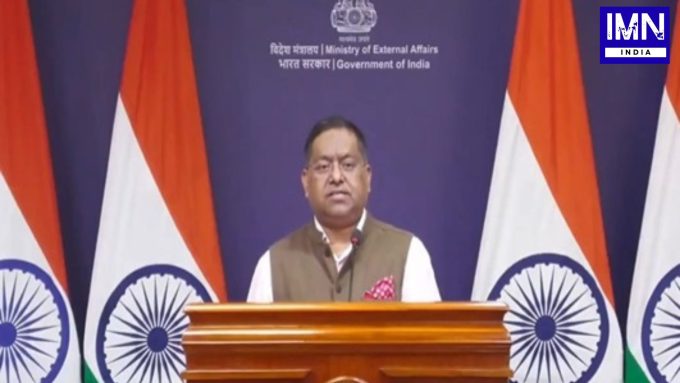
New Delhi: Science and technology have emerged as powerful engines of India’s development over the past twelve years, reshaping governance, strengthening public services, and driving innovation across multiple sectors. Speaking at a press conference in New Delhi on the theme “12 Years of Science in Service of India,” Union Minister Dr. Jitendra Singh highlighted how scientific advancement has moved from the margins of policymaking to become a central pillar of national development.
According to the minister, India’s science ecosystem has undergone a remarkable transformation since 2014, with technology now playing a critical role in flagship government programmes, citizen services, healthcare, agriculture, disaster management, and economic growth. The shift reflects a broader strategy of science-led development aimed at translating research into tangible benefits for citizens.
Dr. Singh noted that one of the most significant achievements of the last decade has been the strengthening of collaboration between government institutions, industry, startups, and researchers. This approach has encouraged innovation-driven entrepreneurship while creating a vibrant ecosystem for emerging technologies.
A major success story highlighted during the event was the rapid growth of India’s biotechnology sector. The country’s bioeconomy has expanded dramatically over the past decade, driven by advancements in genomics, biotechnology research, vaccine development, gene therapies, and biomanufacturing. The sector has also witnessed an unprecedented rise in biotech startups, positioning India among the world’s fastest-growing biotechnology hubs.
The minister emphasized that scientific progress is no longer confined to laboratories. Instead, research outcomes are increasingly delivering real-world solutions. Among the examples cited were advancements in gene and cell therapies, which are opening new possibilities for treating complex diseases, and the development of indigenous biotechnology innovations aimed at reducing healthcare costs and improving accessibility.
Purple Revolution Demonstrates Science’s Impact on Rural India
Another notable example is the Purple Revolution in Jammu and Kashmir, where scientific interventions and agricultural innovation helped transform lavender cultivation into a sustainable source of income for thousands of farmers. The initiative has become a model for how research-backed agricultural practices can improve rural livelihoods and create new economic opportunities.
India’s growing focus on clean energy technologies was also showcased. Dr. Singh pointed to progress in hydrogen fuel cell technology and other renewable energy initiatives that are helping the country move toward a sustainable and energy-secure future. Scientific institutions are also playing an increasingly important role in climate resilience through advanced weather forecasting systems and disaster preparedness technologies.
The minister further highlighted reforms in the space, geospatial, and nuclear sectors, describing them as game-changing policy decisions that have expanded private sector participation. India’s space sector, once dominated by government agencies, now hosts a rapidly growing startup ecosystem contributing to satellite technology, launch services, and space-based applications.
These reforms, coupled with investments in research and innovation, have elevated India’s standing in the global scientific community. From space exploration and biotechnology to quantum technologies and clean energy, the country is increasingly participating in the development of frontier technologies rather than simply adopting them.
How 12 Years of Science in Service of India Transformed Innovation
Experts believe that the foundations laid during the past twelve years will play a crucial role in India’s long-term vision of becoming a developed nation by 2047. With continued emphasis on innovation, scientific research, public-private partnerships, and technology-driven governance, India is positioning itself as a leading knowledge economy and a major global player in science and technology.
As the nation marks 12 Years of Science in Service of India, the government’s message is clear: scientific innovation is no longer a supporting element of development—it is at the heart of India’s growth story and future aspirations.
Follow for more updates: www.instagram.com/imnindia.news/

















Leave a comment