


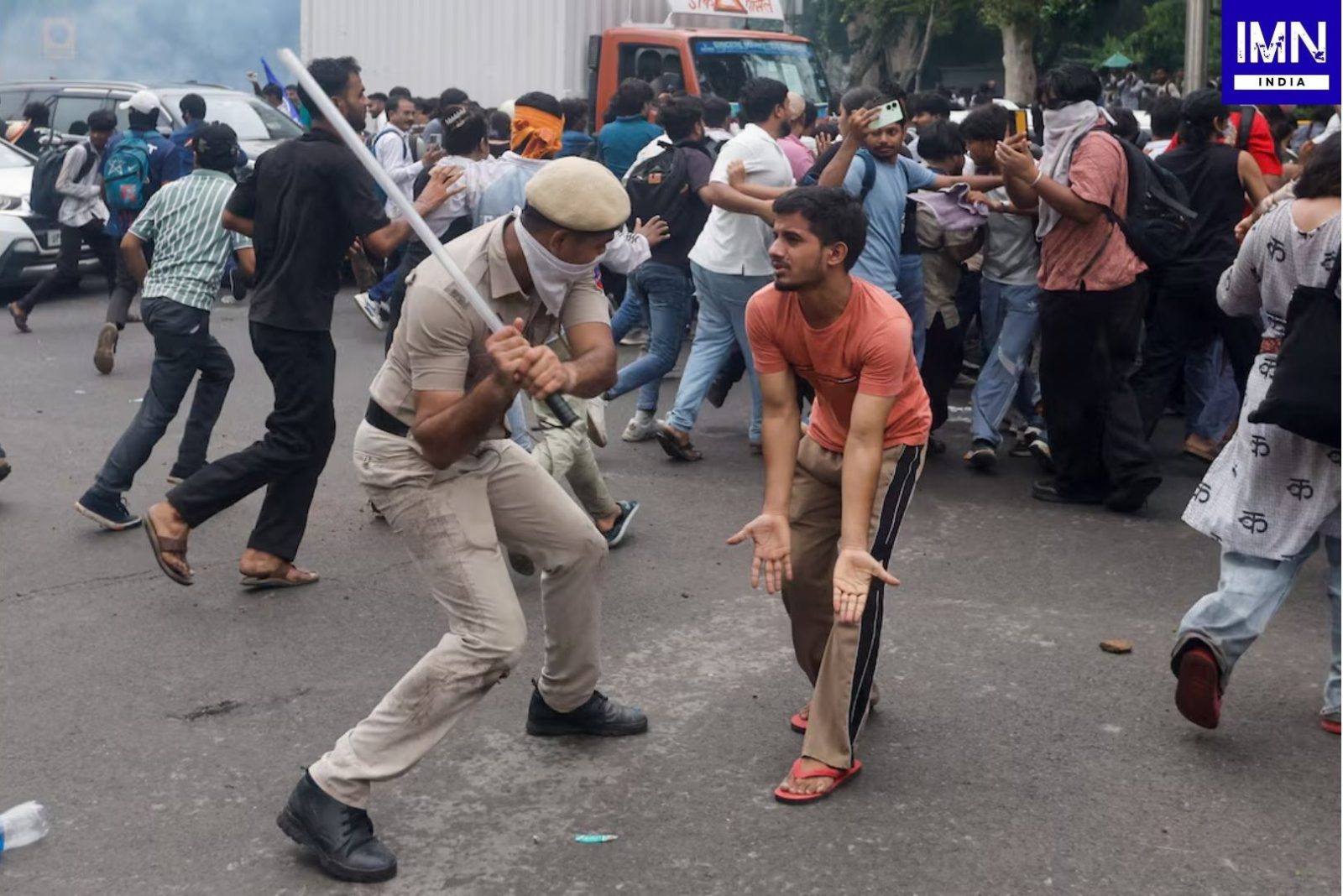
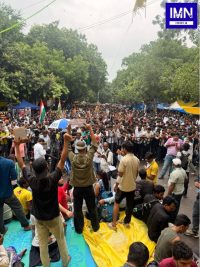
Tens of thousands of Cockroach Janta Party supporters laid siege to Delhi on July 20, 2026, defying police prohibitory orders and marching towards Parliament on the opening day of the Monsoon Session in what has emerged as the largest and most dramatic youth-led protest the national capital has witnessed in years.
The CJP Chalo Sansad march descended into widespread violence after protesters clashed with security personnel at multiple points while attempting to break through barricades and reach the Parliament complex. Delhi Police responded with lathi-charge and tear gas, leaving over 118 police and paramilitary personnel injured and approximately 60 protesters hurt, with several students taken to Ram Manohar Lohia Hospital with broken bones, bruised limbs, and stitched head wounds.
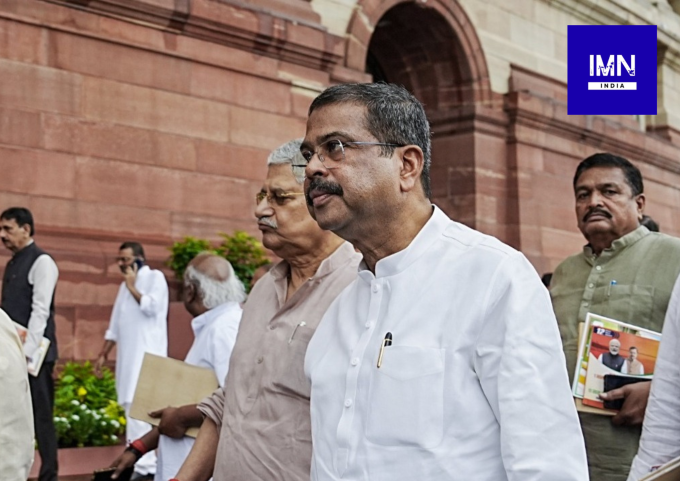
The protest, which had been announced weeks in advance to coincide with Day 1 of the Monsoon Session, was aimed at demanding the resignation of Union Education Minister Dharmendra Pradhan over the NEET-UG 2026 paper leak that led to the cancellation of the examination for over 22 lakh students, a crisis that has also been linked to at least 12 NEET aspirants taking their own lives.
CJP Chalo Sansad March: Violence, Tear Gas and Mass Detentions
Chaotic scenes unfolded near Constitution Club, Shastri Bhavan, and Patel Chowk as thousands of protesters attempted to breach security barricades set up by Delhi Police. Security personnel deployed tear gas shells at multiple locations and resorted to lathi-charge to disperse the crowds. Internet services were also suspended in parts of the high-security zone around Parliament.
Among those injured was 19-year-old NEET aspirant Abhishek Sharma, who reached Jantar Mantar expecting a peaceful demonstration but found the area heavily barricaded and under tight surveillance. He was struck on the head with a baton and lost consciousness. Friends pulled him out of the crowd and rushed him to RML Hospital, where he was discharged hours later with his head wrapped in bandages after receiving two stitches.
“If the government had acknowledged its mistake and assured us it wouldn’t happen again, we wouldn’t have been here,” Sharma said from the hospital.
Delhi Police maintained that the protest and subsequent march towards Parliament were held without permission, with prohibitory orders under Section 163 of the Bharatiya Nagarik Suraksha Sanhita in force in New Delhi district during the Parliament session. Police later alleged that sections of the crowd resorted to stone-pelting and attacked security personnel, forcing the use of tear gas and lathi-charge. Delhi Police also said more than 118 police and paramilitary personnel sustained injuries during the violence, including senior officers holding the ranks of Special Commissioner of Police and Joint Commissioner of Police.
Abhijeet Dipke Detention Row
Among the most dramatic developments of the day was a fierce dispute over the reported detention of CJP founder Abhijeet Dipke near the Reserve Bank of India building, close to the Parliament complex. CJP spokesperson Saurav Das posted on X claiming Dipke had been “picked up by the police” and urged MPs to stand in support of the students on the streets.
Delhi Police swiftly denied the claim on X, saying the allegations were “entirely false” and that Dipke was “available on stage.” The contradictory claims created significant confusion on social media and among protesters, with the CJP and police offering opposite versions of events in real time as confrontations were unfolding across multiple locations simultaneously.
Opposition Rallies Behind the CJP Chalo Sansad March
The CJP Chalo Sansad march drew powerful expressions of political solidarity from across the opposition. Congress leader Rahul Gandhi posted on X that Prime Minister Modi was “the most anti-youth Prime Minister in Indian history,” citing 152 paper leaks, 7.5 crore affected students, and no punishment for those responsible. He said the youth were being punished for asking for accountability.
Congress general secretary Priyanka Gandhi Vadra criticised the Centre for using tear gas and lathi-charge against protesters, saying the government was refusing to discuss problems in the education system and instead “beating up students.” She described the response as “ridiculous” and said Parliament belongs to the youth of India.
Rahul Gandhi and Priyanka Gandhi later visited Ram Manohar Lohia Hospital to meet injured protesters. Jammu and Kashmir Chief Minister Omar Abdullah visited the Jantar Mantar protest site to express solidarity, while Manish Sisodia also joined the demonstration.
In a key development, CJP spokespersons Saurav Das and Ashutosh Rana met Union Health Minister JP Nadda at his residence, conveying the movement’s demands including the immediate resignation of Dharmendra Pradhan. Nadda assured them he would discuss the matter at the appropriate level and indicated the government was open to dialogue, though no concrete commitment on the core demand was made during the meeting.
Protesters continued to occupy Jantar Mantar overnight into July 21, with fresh crowds gathering early in the morning as the agitation entered its next phase.
Also Read: Sonam Wangchuk Hospitalised After Health Deteriorates on Day 21 of Hunger Strike Amid Major Protest
Follow for more updates: www.instagram.com/imnindia.news/









Leave a comment