


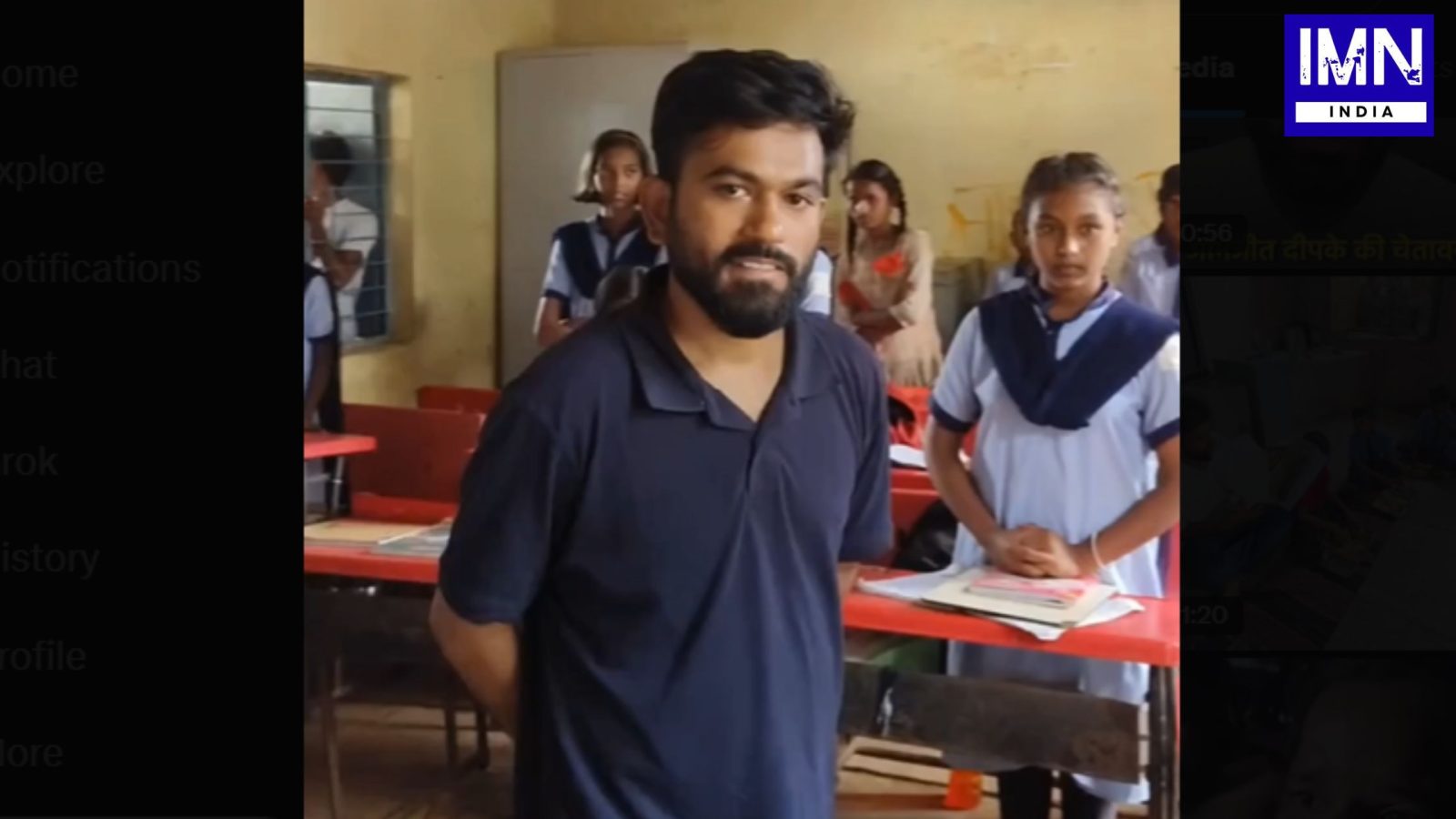
Latur: Police in Maharashtra’s Latur district have registered an FIR against Cockroach Janta Party (CJP) founder Abhijeet Dipke and several others over allegations that they entered a government school without permission, disrupted educational and official work, threatened teachers and made statements that allegedly defamed the institution.
The case was registered at the Ausa police station following a complaint by Sayyed Shamshadbano Khairatali, a teacher at the Zilla Parishad Urdu School in Jawali, near Ausa.
According to the complaint, Dipke and his associates entered the school premises without obtaining permission from the authorities while the institution was functioning. They allegedly sat among students, questioned them and recorded their interactions, which the complainant claimed disrupted regular teaching as well as government work being carried out at the school.
The incident took place during Dipke’s ongoing “School Thik Karo” campaign, through which CJP members have been visiting government schools and highlighting alleged shortcomings in infrastructure, facilities and administration.
During the visit to the Jawali school, Dipke and his associates allegedly interacted with students and sought information about the functioning of the institution. The visit was also reportedly recorded on video, with portions subsequently shared on social media.
The complaint alleges that Dipke made claims suggesting that students from another school had been brought into the premises and made to sit in classrooms before his visit. The complainant has alleged that these statements damaged the reputation of the school and amounted to defamation.
The teacher also alleged that Dipke threatened to have the teachers suspended. The complaint claimed that his actions and statements created disruption within the school and interfered with the functioning of the educational institution.
Based on these allegations, police registered the FIR under provisions of the Bharatiya Nyaya Sanhita (BNS) dealing with assault or use of criminal force to deter a public servant from performing official duties, house trespass, criminal intimidation and criminal defamation.
The case includes Section 132, relating to assault or use of criminal force against a public servant to deter the discharge of official duties; Section 329(3) concerning house trespass; Section 351(2) relating to criminal intimidation; and Section 356(2) concerning criminal defamation.
Police have said that the matter is under investigation. The registration of an FIR does not establish the guilt of Dipke or the other accused, and the allegations will have to be examined as part of the investigation and subsequent legal process.
The incident has occurred amid a wider campaign by the Cockroach Janta Party focusing on the condition of government-run schools. The “School Thik Karo” campaign was launched on August 15, with Dipke and CJP volunteers announcing plans to visit schools in different parts of the country and highlight issues affecting students and teachers.
Dipke began the campaign from his native village in Hingoli, Maharashtra. Since then, members of the organisation have visited government schools in several locations, documenting conditions and raising questions about infrastructure, sanitation, teaching facilities and other aspects of school administration.
The campaign has generated both attention and controversy. While its supporters say the visits are intended to expose problems in government education and pressure authorities to address them, officials and others have objected to some of the methods used during the inspections.
The Latur case is the latest dispute to emerge from these school visits.
The CJP’s campaign has also faced opposition in other parts of the country. A team associated with the organisation was reportedly confronted during a visit to a government school in Jaipur, Rajasthan, with videos circulating on social media showing a confrontation involving members of the team and local residents.
The CJP alleged that its team had been attacked during the Jaipur visit and accused people associated with the Bharatiya Janata Party of involvement. Local residents and others disputed aspects of the allegations, and a separate complaint was subsequently filed against members of the CJP team.
The developments have added to the political and public debate surrounding the organisation’s campaign. CJP representatives have maintained that their objective is to expose problems in government schools and demand accountability from authorities.
In Maharashtra, the organisation has particularly focused on the condition of state-run schools. Dipke has publicly criticised education authorities over what he describes as inadequate infrastructure and facilities for students.
During previous school visits, he has questioned school officials over issues including students being asked to perform cleaning work, the availability of basic facilities and the overall condition of government educational institutions.
The organisation has also called for action against officials and school administrators whom it believes are responsible for serious shortcomings.
The Latur incident, however, has raised a separate question over the manner in which outside individuals or political campaigners can inspect functioning government schools.
Government schools operate under administrative rules governing access to their premises, particularly while classes are underway. Any unauthorised entry or disruption can potentially interfere with teaching activities and the functioning of public institutions.
The complaint filed by the teacher specifically alleges that Dipke and his associates entered the school without permission and interacted with students while classes and official work were taking place.
The allegation that students were brought from another institution has also become a significant point of dispute. Dipke reportedly questioned students during his visit and later shared footage on social media, while the school authorities have alleged that his interpretation of what he observed damaged the institution’s reputation.
The competing claims will now have to be examined by investigators. Police may question the complainant, teachers, school staff, students and other witnesses who were present during the visit. Video recordings and social media posts associated with the incident could also form part of the investigation.
The case has attracted attention because of Dipke’s growing public profile and the CJP’s recent campaign against alleged deficiencies in government schools. His activities have increasingly involved direct visits to institutions and public criticism of government officials and administrators.
Dipke has continued to use social media to document these visits and share his observations with supporters and the wider public. The campaign has consequently generated considerable online attention, with videos from government schools being widely circulated.
At the same time, authorities have begun placing greater restrictions on unauthorised inspections of schools. In Mumbai, civic education authorities have reportedly barred CJP volunteers from entering municipal schools without prior permission.
The restrictions reflect concerns over the possibility of disruption to students and teachers while also raising broader questions about how civil society groups and political organisations should conduct inspections of public institutions.
The CJP has argued that its campaign is intended to improve government schools rather than interfere with their functioning. The organisation has maintained that documenting problems and bringing them to public attention is necessary to pressure authorities to improve facilities.
The latest FIR will now put the focus on whether the methods used during the Latur school visit crossed legal boundaries.
The allegations against Dipke and his associates remain subject to investigation, and no conviction has been recorded in the case. The accused will have the opportunity to respond to the allegations through the legal process.
The controversy comes at a time when the condition of government schools has become a major subject of political and public discussion. Questions surrounding infrastructure, sanitation, teacher availability, student safety and access to basic facilities continue to attract attention across several states.
The School Thik Karo campaign has attempted to place these issues at the centre of public debate by conducting direct visits and publishing footage from government schools. However, the Latur FIR demonstrates the legal and administrative complications that can arise when such inspections are carried out without prior permission.
As the investigation progresses, authorities will examine the allegations made by the school teacher, the conduct of Dipke and the other individuals involved, and the material circulated online following the visit.
The case is therefore likely to remain closely watched, not only because of the allegations against the CJP founder but also because it raises wider questions about public accountability, access to government institutions, freedom to document public issues and the limits of political campaigning inside functioning educational establishments.













Leave a comment