


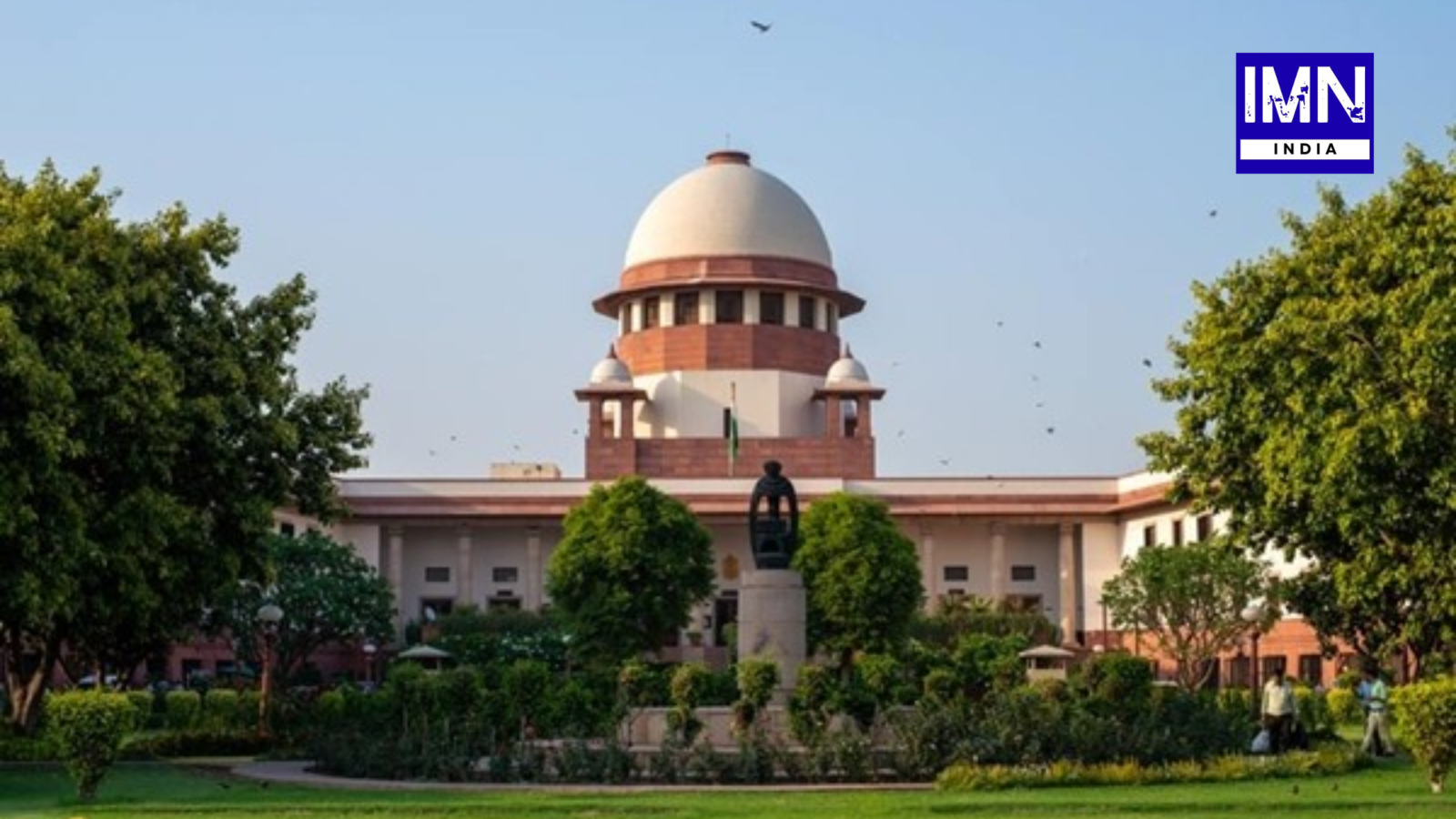
The Supreme Court on Monday clarified that Delhi and other state governments are free to close or withdraw FIRs registered against students who took part in recent protests over the NEET paper leak issue. The clarification came days after the court’s earlier order had triggered confusion among officials handling these cases.
Background to the Supreme Court FIR Withdrawal Order
A three-judge Bench led by Chief Justice Surya Kant was hearing a batch of pleas alleging excessive police action against students who protested at Delhi’s Jantar Mantar on July 20 and at other locations nationwide. The demonstrations had erupted over allegations of a paper leak in the NEET medical entrance examination, drawing large numbers of students onto the streets.
Families of police personnel injured during the protests had also moved the top court, seeking action against demonstrators accused of assaulting officers on duty. The matter has therefore involved competing concerns: protecting students’ right to protest and addressing complaints of violence against law enforcement.
The Bench explained that its July 28 order, which had permitted prosecution of protesters with “criminal antecedents,” was never meant to apply broadly. That order, the court said, was intended only for individuals accused of grave and heinous offences, not for students facing routine charges linked to the demonstrations.
Centre Flags Legal Confusion Over FIR Terminology
As the hearing opened, Solicitor General Tushar Mehta, representing the Centre, told the Bench that the government remained committed to its earlier assurance of facilitating relief for students. However, he pointed out a technical problem with the language being used.
Mehta clarified that Indian criminal law does not actually provide for the “withdrawal” of an FIR in the literal sense. He noted that the correct legal remedies available are filing a closure report, moving an application to withdraw prosecution, or approaching the competent court for quashing of proceedings. This clarification was aimed at ensuring state governments follow proper legal procedure rather than acting under a mistaken understanding of the earlier directive.
The Solicitor General’s submission appeared to prompt the Bench’s clarification, which now gives states clearer legal footing to act on cases against protesting students without running into procedural hurdles.
Court to Frame Protocol on Pellet Gun Use
Beyond the FIR issue, Chief Justice Surya Kant indicated that the court intends to lay down a detailed protocol governing when and how pellet guns may be used by police during law and order situations. This move follows concerns raised about injuries suffered by protesters during the crackdown on the NEET demonstrations.
The Bench also signalled it was weighing two possible mechanisms for investigating allegations of police excess. One option under consideration is forming a Special Investigation Team made up of police officers. Alternatively, the court may appoint a committee headed by a retired judge to conduct an independent inquiry into the events at Jantar Mantar and elsewhere.
Either mechanism, if constituted, would be tasked with examining claims from both sides — students alleging disproportionate police action, and police families alleging assault by protesters.
Matter Posted for Further Hearing
The Supreme Court has posted the case for further hearing on August 18, giving the Centre and state governments time to act on the clarified position regarding FIRs. It also gives the court time to finalise its proposed protocol on pellet gun usage and decide on the composition of any investigative body.
Conclusion
The Supreme Court’s clarification brings much-needed relief to students facing legal action over the NEET protests, while keeping the door open for accountability on both sides. With a pellet gun protocol and a possible independent probe in the works, the coming weeks are likely to shape how future student protests are handled by law enforcement across the country.
Also read: Parliament Adjourned Amid NEET Protest Row, Public Examinations Amendment Bill Introduced
Follow for more updates: www.instagram.com/imnindia.news/















Leave a comment