


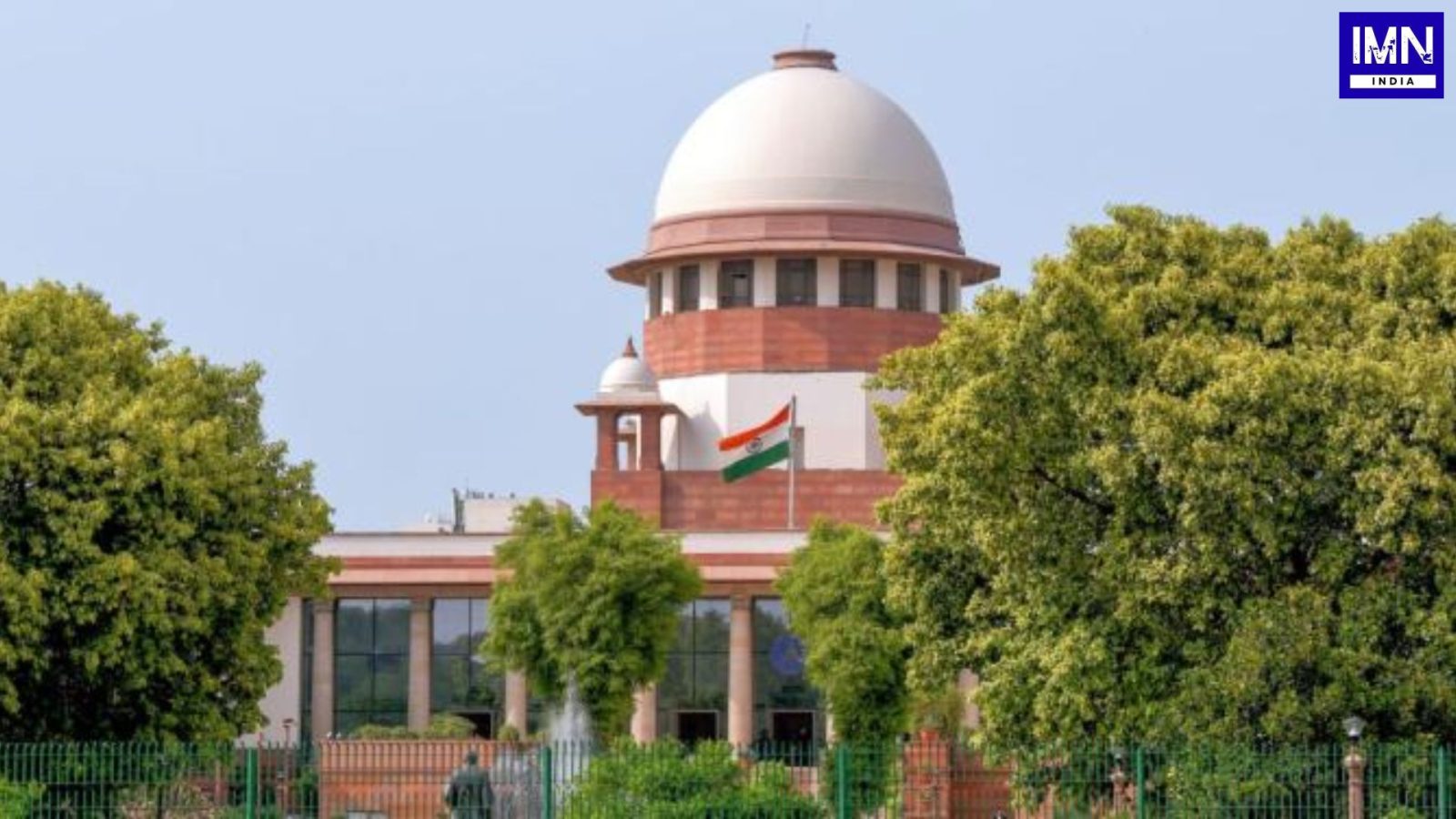
5 New Supreme Court Judges Sworn In by CJI Surya Kant
Five new judges were sworn into the Supreme Court of India on June 2, 2026, with Chief Justice of India Surya Kant administering the oath of office in a ceremony that significantly strengthened the bench of the country’s highest constitutional court and made history with the elevation of Senior Advocate V Mohana directly from the Bar.
The 5 new Supreme Court judges are Justice Sheel Nagu, Justice Shree Chandrashekhar, Justice Sanjeev Sachdeva, Justice Arun Palli, and Senior Advocate V Mohana. Their appointments have significantly strengthened the apex court and reduced vacancies on the Supreme Court bench.
The appointments were made following recommendations of the Supreme Court Collegium and subsequent approval by the Union Government. Union Minister of State for Law and Justice Arjun Ram Meghwal announced the development on social media.
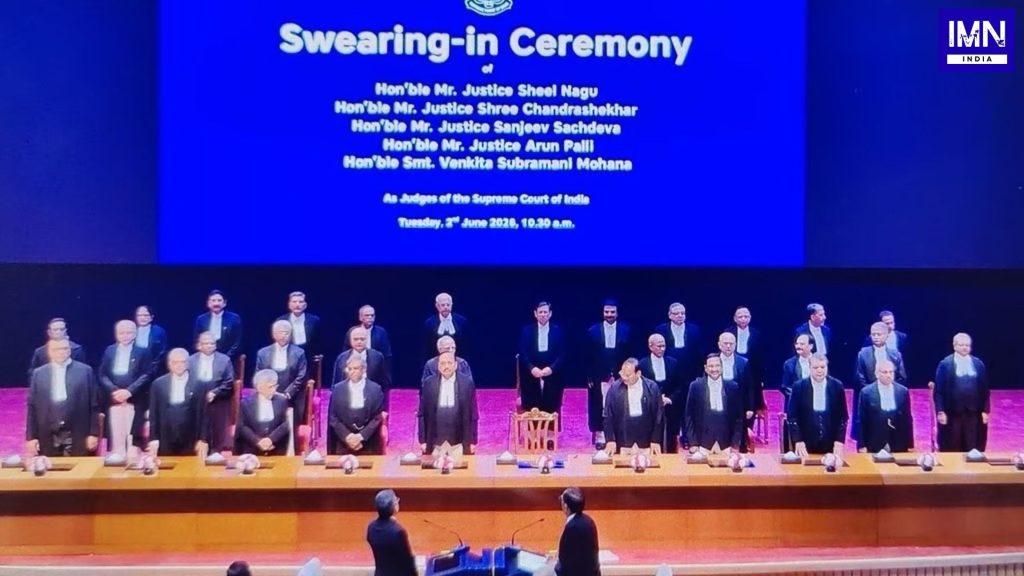
5 New Supreme Court Judges: Who Are They
Four of the 5 new Supreme Court judges were serving as Chief Justices of High Courts at the time of their appointment, bringing decades of judicial experience across constitutional, civil, criminal, and administrative law to the apex court bench.
Justice Sheel Nagu was serving as the Chief Justice of the Punjab and Haryana High Court before his elevation. Justice Shree Chandrashekhar served as the Chief Justice of the Bombay High Court and was notably a member of the Parliamentary Judges Inquiry Committee that examined allegations against Justice Yashwant Varma. Justice Sanjeev Sachdeva and Justice Arun Palli also come with extensive experience as High Court Chief Justices, with Justice Palli having led several mediation and Lok Adalat initiatives as Executive Chairman of the Haryana State Legal Services Authority during his tenure.
Senior Advocate V Mohana is the standout appointment among the 5 new Supreme Court judges, having been elevated directly from the Bar rather than through the conventional route of prior service as a High Court judge. Born on June 27, 1966, Mohana hails from Coimbatore and graduated from Coimbatore Law College in 1988, belonging to the first ever batch of India’s five-year integrated law programme. She trained under senior advocate C S Vaidyanathan, became an Advocate-on-Record in 1996, and was designated a Senior Advocate by the Supreme Court in 2015.
Justice V Mohana: 2nd Woman Elevated Directly From the Bar
The most historically significant appointment among the 5 new Supreme Court judges is the elevation of V Mohana, who has become only the second woman in the history of the Indian judiciary to be directly elevated from the Bar to the Supreme Court. The first was Justice Indu Malhotra, who made history in 2018 when she was similarly elevated directly from the Bar without prior service as a High Court judge.
With her swearing-in, V Mohana also becomes the 12th woman judge in the entire history of the Supreme Court of India, a statistic that underscores how slowly gender representation has moved in the country’s highest court even as the legal profession itself has seen growing participation from women over the decades.
Her appointment has been widely welcomed by the legal community, women’s rights advocates, and judicial reform observers, who see it as a meaningful step toward greater diversity on the Supreme Court bench. The fact that she comes directly from the Bar also brings a different perspective to the court, shaped by years of legal practice and advocacy rather than the judicial hierarchy of the High Court system.
Bench Strength, Vacancies and the Backlog of Cases
The appointment of 5 new Supreme Court judges addresses a pressing need. The apex court has been functioning with vacancies for an extended period, and the backlog of pending cases before the Supreme Court and across India’s judiciary has been a subject of sustained public concern. The new appointments have brought the court close to its full working strength and are expected to enhance its ability to handle pending matters more efficiently.
The swearing-in of the 5 new Supreme Court judges reflects ongoing efforts to strengthen the judiciary and improve the delivery of justice by ensuring that vacancies in the apex court are filled in a timely manner.
The 5 new Supreme Court judges collectively bring expertise across constitutional law, civil litigation, criminal law, administrative jurisprudence, and alternative dispute resolution, enriching the bench with diverse experience expected to improve the quality and efficiency of the court’s functioning. With major constitutional matters, public interest litigations, and high-stakes appeals regularly coming before the Supreme Court, a bench operating at near full strength is expected to make a tangible difference to the pace at which justice is delivered to litigants across the country.
Also Read: Allahabad High Court Says Lok Adalats Cannot Grant Divorce Decrees in Matrimonial Cases
Follow for more updates: www.instagram.com/imnindia.news/














Leave a comment