



WhatsApp usernames are now rolling out, giving people a way to connect and chat without exchanging phone numbers. The Meta-owned platform opened username reservations on June 29, 2026, ahead of a phased global rollout later this year.
Meta has described the update as one of the most significant privacy changes to WhatsApp since end-to-end encryption was introduced back in 2016. The shift addresses a discomfort many users quietly share: handing over a personal phone number to a new colleague, classmate, or someone met online can feel like an unnecessary risk, especially when that number is tied to so many other parts of daily life.
How WhatsApp Usernames Will Work
Once the feature becomes fully active, anyone messaging a contact for the first time will see that person’s username instead of their phone number. WhatsApp has deliberately left out a public directory or search function. This means a person must already know someone’s exact username before they can start a conversation, which limits unwanted contact and keeps discovery intentional rather than open-ended.
Users who still prefer the traditional approach are not locked out of it. A new native sharing flow allows people to exchange phone numbers directly, with consent prompts appearing on both sides before any number is revealed. This dual system means WhatsApp usernames function as an added layer of choice rather than a replacement for existing habits.
Reserving a Username Starting Today
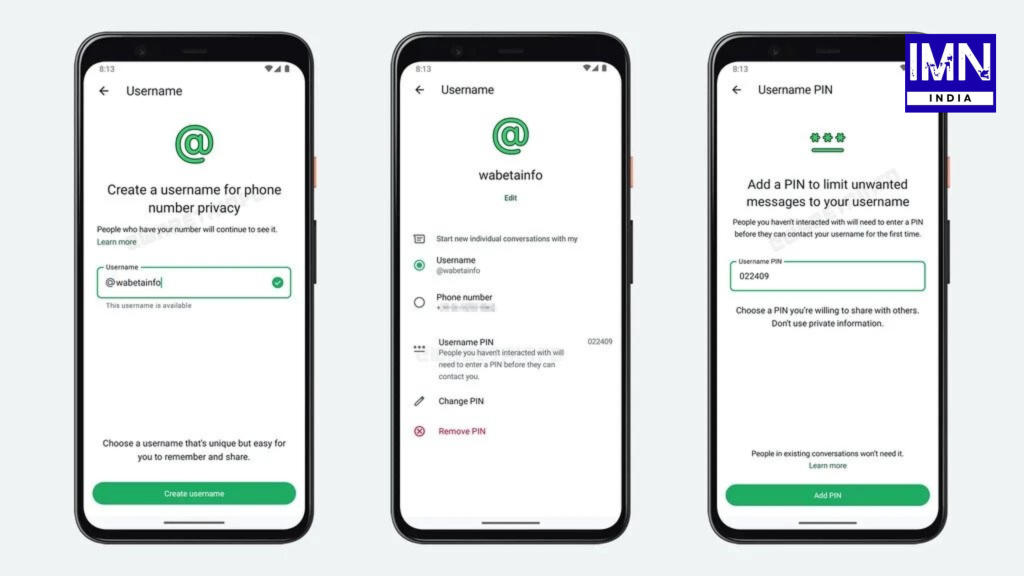
The reservation process is already live on both Android and iOS. To claim a handle, users need to update to the latest version of the app, then go to Settings, Account, and Username. Those unsure of what to choose can rely on a built-in generator that suggests available options.
Creators, small businesses, and organisations have an added benefit: they can claim a username that matches their existing Instagram or Facebook handle. To do so, they must first verify ownership through Meta’s Accounts Center, a step designed to prevent misuse of recognisable brand names.
Username Format and Restrictions
WhatsApp has set firm rules around how usernames can be formatted. Handles must run between three and 35 characters, using only lowercase letters, numbers, periods, and underscores, and they must include at least one letter. Names cannot begin with “www” or end in domain-style extensions such as .com or .net. The company has also built in protections against impersonation, and accounts belonging to notable public figures will receive verification badges.
With WhatsApp now serving more than three billion users globally, overlapping name choices are almost guaranteed. That scale is precisely why Meta chose to open reservations early, giving people a window to secure their preferred username before the feature rolls out publicly to everyone.
What Changes for Businesses
Businesses will experience this update somewhat differently through what Meta calls the Business-Scoped User ID, or BSUID. Unlike individual accounts, businesses will keep their phone number visible to customers while also gaining a unique, searchable username for branding purposes. Existing customer contacts can still reach a business through its phone number exactly as before, so there’s no disruption to current communication channels.
Companies using the WhatsApp Business API have already been able to create and claim usernames since June 2026, with testing and rollout phases expected to continue throughout the rest of the year as Meta fine-tunes the system based on early feedback.
Conclusion
The introduction of WhatsApp usernames marks a meaningful step toward giving users more control over their personal information. By separating identity from phone numbers, the platform aims to make everyday conversations feel safer, particularly for those who frequently interact with new contacts. As the phased rollout continues through 2026, this change is expected to reshape how billions of people connect and communicate on the app.
Follow for more updates: www.instagram.com/imnindia.news/
















Leave a comment