


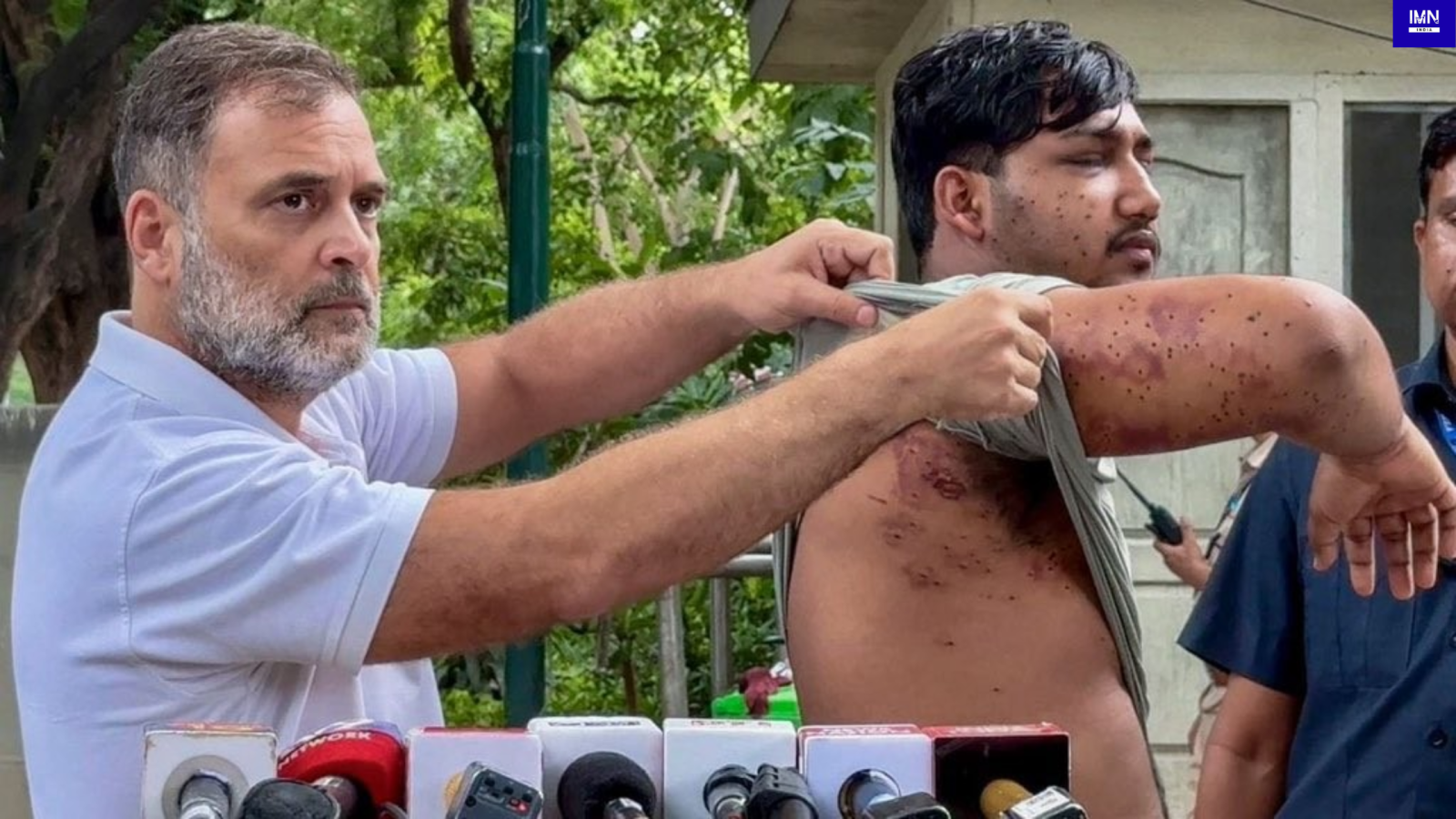
The Supreme Court has agreed to scrutinise the rules around the use of pellet guns for crowd control, following claims that metallic pellets were fired at demonstrators during the Cockroach Janta Party protests in Delhi. Rather than entertain a plea for an outright ban, the Bench signalled it would rather see a clearly defined enforcement protocol put in place.
The development marks a fresh test of how far Indian courts are willing to go in regulating crowd-control weaponry, an issue that resurfaces whenever security forces face accusations of using disproportionate force against demonstrators.
Court Seeks Records and Government Response
A Bench led by Chief Justice of India Surya Kant, sitting alongside Justice Joymalya Bagchi, issued notice to the Centre on Thursday. The government has been asked to place before the court its existing rules, standard operating procedures and guidelines that govern how police forces deploy pellet guns during crowd-control operations.
The Bench also ordered that all records connected to the deployment of pellet guns during the recent Delhi protest be preserved. This step is meant to ensure that evidence relevant to the case remains available as the matter proceeds through further hearings.
By seeking documentary proof rather than relying solely on oral submissions, the court signalled that its eventual findings would rest on verified operational records rather than competing versions of events presented by either side.
Petitioners Allege Disproportionate Force
Counsel appearing for the petitioners told the court that metallic pellets had been fired at student protesters who were demonstrating peacefully. They argued that using such ammunition against an unarmed gathering was disproportionate and infringed upon the constitutional right to peaceful assembly.
The petitioners asked the Bench to lay down strict norms that would prevent security personnel from resorting to excessive force against civilians in future protests. Their submission framed the case as one concerning accountability rather than a demand to criminalise a category of weaponry outright.
They further contended that peaceful assembly is a constitutionally protected right, and that any weapon capable of causing grievous injury should be reserved strictly for situations involving a genuine threat to public order or safety.
Bench Points to Graded Use-of-Force Framework
In its observations, the court noted that police regulations already allow pellet guns to be used for crowd control in exceptional circumstances. However, it stressed that any such deployment must strictly follow the graded use-of-force framework that governs proportional police action.
The judges indicated that their inquiry would centre on two questions: whether officers followed the existing protocol during the Delhi protest, and whether the current rules need additional safeguards to prevent misuse going forward. This framing keeps the focus on implementation rather than the legality of the equipment itself.
Legal experts note that a graded response framework typically requires personnel to attempt de-escalation and less severe measures before resorting to weapons capable of causing serious injury, making adherence to sequence as important as the choice of equipment itself.
Why a Ban Was Not on the Table
The Bench clarified early in the hearing that it was not inclined, at this stage, to prohibit pellet guns for crowd control altogether. Instead, it suggested the petition be amended to seek a comprehensive protocol specifying when, how, and under what circumstances such weapons may be used, along with mechanisms to hold personnel accountable for their misuse.
This approach reflects a broader judicial pattern of favouring regulatory reform over blanket prohibition when weighing operational needs of law enforcement against citizens’ rights.
Link to the NEET-UG Protest Row
The case stems from allegations of excessive force during protests organised by the Cockroach Janta Party over the alleged NEET-UG paper leak. Demonstrators had claimed that police used pellet guns while dispersing the crowd, leading to injuries that prompted the petition now before the Supreme Court.
The Centre is expected to submit its SOPs and related records when the matter is next listed. The Supreme Court will then examine whether the force used during the Delhi protest complied with constitutional guarantees and existing legal standards, a review that could eventually shape a nationwide protocol for pellet guns for crowd control.
Conclusion
Given the Bench’s early indications, the final outcome is likely to focus less on banning the equipment and more on tightening the conditions, oversight and accountability attached to its use during future demonstrations.
Also read: Supreme Court Orders Release of Minor NEET Protesters, Seeks Preservation of Digital Evidence
Follow for more updates: www.instagram.com/imnindia.news/
















Leave a comment