


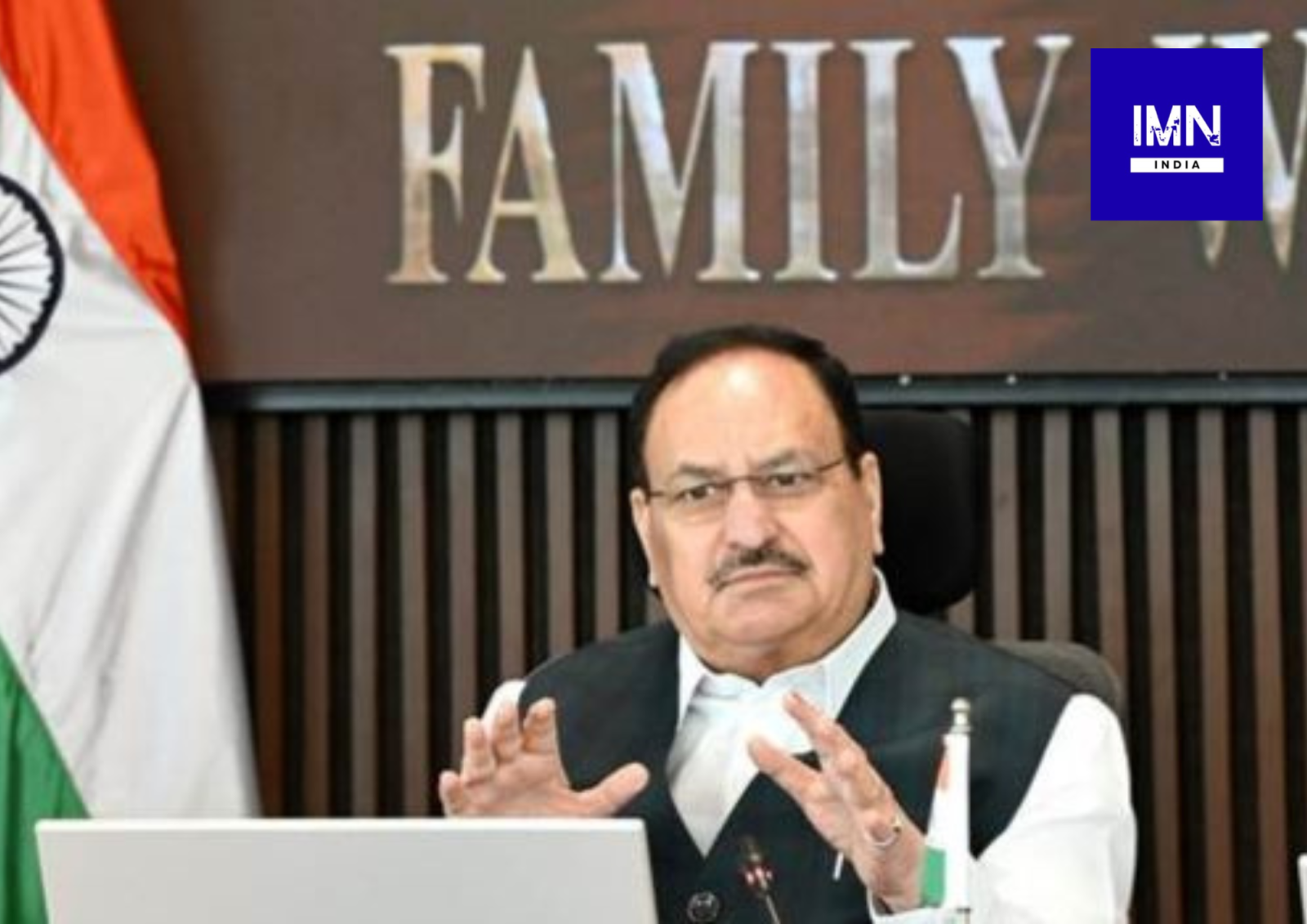
Union Health Minister Jagat Prakash Nadda has called for greater public participation to accelerate the TB Mukt Bharat Abhiyaan, emphasising the need for stronger community involvement, technology-driven diagnosis and improved grassroots outreach. The directions were issued during a high-level review meeting with the Delhi Government that also assessed the capital’s preparedness to tackle dengue ahead of the monsoon season.
During the meeting, Nadda stressed that communication related to the TB Mukt Bharat Abhiyaan should be simple, clear and easy for the public to understand. He said awareness campaigns become more effective when information reaches people in a local and accessible language. The Minister also directed authorities to actively involve elected representatives and public leaders in spreading awareness about tuberculosis prevention, diagnosis and treatment.
Focus on Grassroots Monitoring and Community Participation
The Union Health Minister emphasised that every ward should be monitored by senior government officials to ensure the effective implementation of the campaign. He highlighted that regular supervision and accountability are essential to achieving the goal of eliminating tuberculosis from India.
Referring to guidance provided by Prime Minister Narendra Modi during a recent PRAGATI meeting, Nadda urged authorities to involve MY Bharat volunteers in awareness and outreach activities. The volunteers are expected to play a key role in mobilising communities, identifying vulnerable populations and encouraging people to seek timely medical attention.
The Minister also called for greater participation from Resident Welfare Associations (RWAs). He said RWAs can help spread awareness, support local health initiatives and encourage community participation in both tuberculosis elimination efforts and dengue prevention campaigns.
AI Technology to Strengthen Early TB Detection
Highlighting the importance of innovation in healthcare, Nadda announced support for additional AI-enabled handheld X-ray machines. These advanced devices are expected to improve early diagnosis and help health authorities detect tuberculosis cases more efficiently.
Early detection remains one of the most important aspects of tuberculosis control. Health experts have consistently emphasized that identifying and treating patients at an early stage reduces transmission and improves treatment outcomes. The use of artificial intelligence in screening and diagnosis is increasingly being viewed as a valuable tool in India’s fight against TB.
India has significantly strengthened its tuberculosis elimination efforts in recent years through active case finding, nutritional support programs and expanded diagnostic facilities. The government’s target of eliminating TB ahead of the global Sustainable Development Goal timeline has led to increased investments in healthcare infrastructure and community-based interventions.
Dengue Preparedness Also Reviewed
Apart from reviewing the TB Mukt Bharat Abhiyaan, the meeting also focused on Delhi’s preparedness for dengue. Officials discussed surveillance mechanisms, public awareness campaigns and preventive measures required to contain the spread of mosquito-borne diseases during the monsoon season.
The Health Minister emphasized the need for coordinated action among government departments, local bodies and community organizations. Effective vector control, timely monitoring of cases and public cooperation were identified as key elements in preventing dengue outbreaks.
With dengue cases often rising during periods of heavy rainfall and waterlogging, authorities have been asked to strengthen preparedness measures well in advance. Public awareness regarding mosquito breeding prevention, sanitation and early reporting of symptoms is expected to remain a major focus.
The review meeting reflects the Centre’s continued emphasis on strengthening public health systems through technology, community engagement and coordinated governance. Officials believe that greater public participation, combined with modern diagnostic tools and effective local monitoring, can significantly contribute to the success of the TB Mukt Bharat Abhiyaan while enhancing Delhi’s preparedness against seasonal health challenges.
As India continues its mission to eliminate tuberculosis and improve disease surveillance, health authorities are expected to intensify awareness campaigns and expand healthcare outreach across urban and rural communities.
Also read: PM Modi Reviews Flagship Schemes with Top Secretaries, Calls for Citizen-Centric Governance
Follow for more updates: www.instagram.com/imnindia.news














Leave a comment