


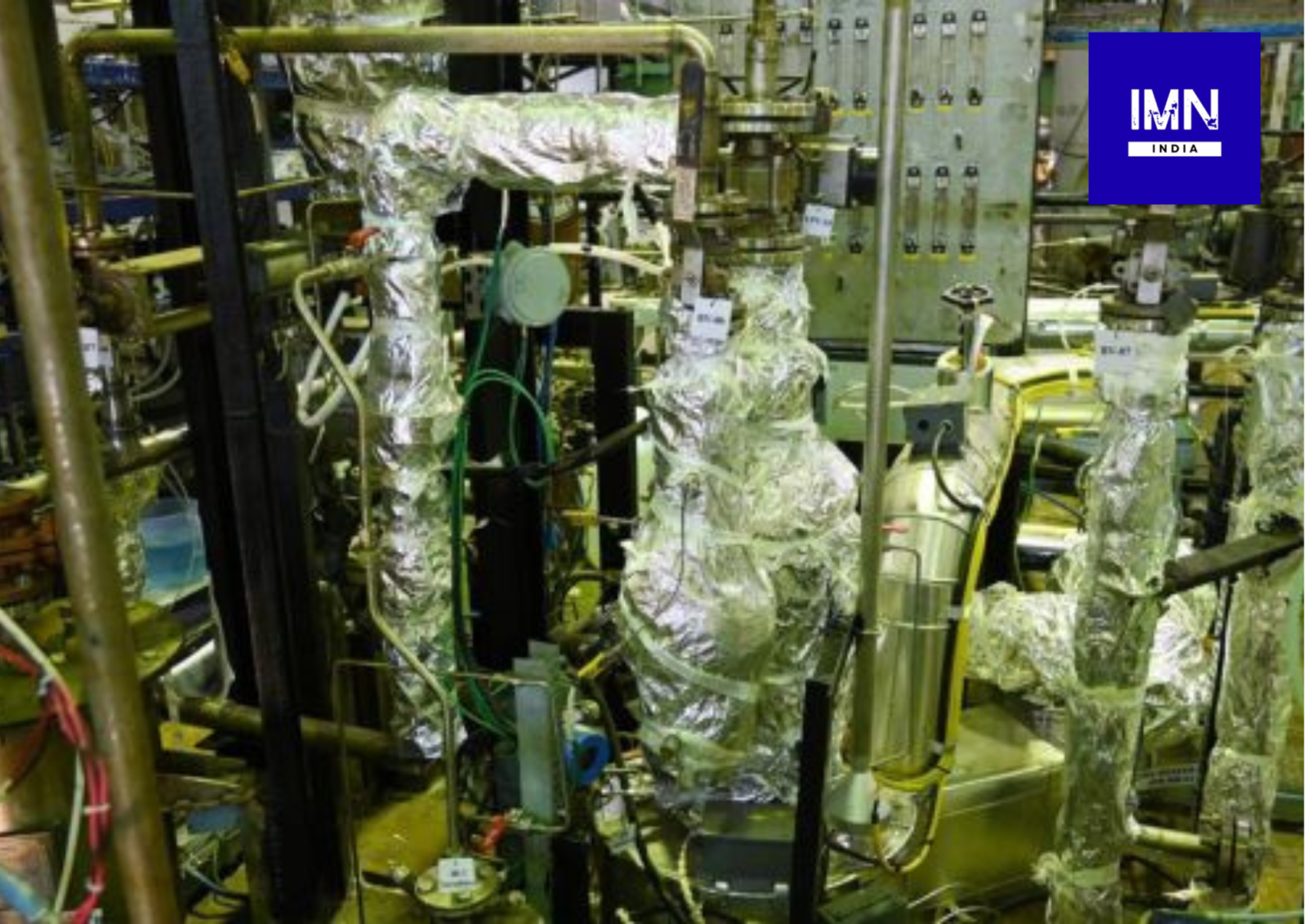
New Delhi: India has achieved a major milestone in clean energy technology with the inauguration of the world’s first Nuclear-Powered Hydrogen Production Facility based on the Copper-Chlorine (Cu-Cl) Thermochemical Cycle. The facility was inaugurated at the Indira Gandhi Centre for Atomic Research (IGCAR) in Kalpakkam by Department of Atomic Energy Secretary Ajit Kumar Mohanty.
The pioneering project utilizes nuclear process heat generated from the Fast Breeder Test Reactor (FBTR) to produce hydrogen. The development places India among the leading nations exploring advanced hydrogen production technologies that can support long-term energy security and reduce carbon emissions.
Speaking at the inauguration, Dr. Mohanty highlighted the growing importance of integrating nuclear power with emerging clean energy technologies. He said nuclear energy offers a reliable source of carbon-free power and is ideally suited to support large-scale hydrogen production. According to him, the technology can play a significant role in achieving India’s decarbonisation goals while strengthening energy independence.
Indigenous Technology Marks Major Scientific Achievement
The Nuclear-Powered Hydrogen Production Facility has been established as a technology demonstrator to validate hydrogen generation through the Copper-Chlorine thermochemical cycle. The process has been developed indigenously by scientists at the Bhabha Atomic Research Centre (BARC), Mumbai.
Unlike conventional hydrogen production methods that often rely on fossil fuels, the Cu-Cl thermochemical process uses heat and chemical reactions to generate hydrogen more efficiently while minimising greenhouse gas emissions. Scientists believe this technology could become a viable pathway for producing clean hydrogen at an industrial scale in the future.
The commissioning of the facility marks the culmination of years of research, engineering design, process development, equipment fabrication and extensive testing carried out jointly by BARC and IGCAR. Officials described the project as a significant demonstration of India’s capability to develop advanced indigenous technologies in the clean energy sector.
Hydrogen Emerging as Key Pillar of Future Energy Systems
Hydrogen is increasingly being viewed as a critical fuel for the global energy transition. Governments worldwide are investing heavily in green and low-carbon hydrogen technologies to reduce dependence on fossil fuels and achieve climate targets. India has also been actively promoting hydrogen-based solutions through various national initiatives aimed at creating a sustainable energy ecosystem.
The latest achievement complements the country’s broader efforts to develop alternative energy sources and reduce carbon intensity. Experts believe hydrogen can play an important role in sectors that are difficult to electrify, including heavy industries, transportation and large-scale energy storage.
India has already been expanding its renewable energy capacity while simultaneously investing in advanced nuclear technologies. The successful demonstration of a Nuclear-Powered Hydrogen Production Facility creates an additional pathway for producing clean hydrogen using stable and continuous energy generated from nuclear reactors.
The project also highlights the growing role of research institutions in supporting national energy goals. By combining nuclear technology with hydrogen production, India is exploring innovative solutions that can help meet future energy demand while maintaining environmental sustainability.
As countries across the world search for reliable clean energy alternatives, the Kalpakkam facility stands out as a landmark achievement. Officials believe the knowledge gained from this project will contribute to future commercial-scale hydrogen production systems and strengthen India’s position in the global clean energy landscape.
The inauguration of the Nuclear-Powered Hydrogen Production Facility is expected to accelerate research in advanced hydrogen technologies and open new opportunities for collaboration between the nuclear and clean energy sectors. With hydrogen emerging as a crucial component of future energy strategies, the project represents a significant step toward a sustainable and low-carbon energy future for India.
Follow for more updates: www.instagram.com/imnindia.news/















Leave a comment