


New Delhi: In a major development, the Delhi High Court on Monday saw a strong assertion of judicial independence as Justice Swarana Kanta Sharma refused to recuse herself from hearing the Delhi liquor policy case involving Arvind Kejriwal.
⚖️ “Justice Does Not Bend Under Pressure”
Delivering a firm and detailed order, Justice Sharma rejected Kejriwal’s plea alleging bias, stating:
“My oath is to the Constitution… justice does not bend under pressure. I will decide the case fearlessly and without bias.”
She emphasized that courts cannot allow attempts that may undermine public trust in the judiciary.
🔴 Why Kejriwal Sought Recusal
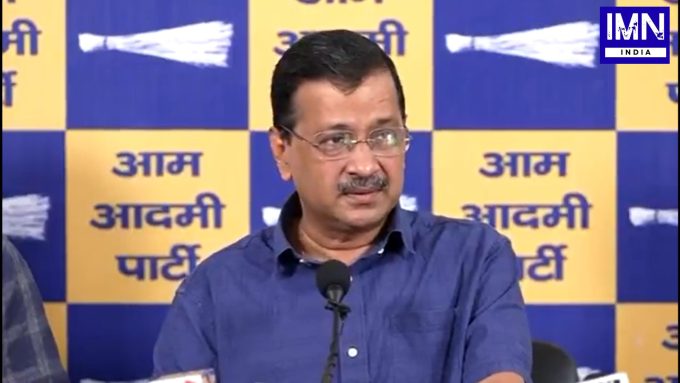
Kejriwal had moved an application seeking the judge’s withdrawal from the case, citing:
- “Reasonable apprehension” of lack of impartiality
- Alleged conflict of interest due to her children being on a government panel
- Participation in certain public events
However, the court found no concrete evidence to support claims of bias.
🧾 Court’s Strong Observations
Justice Sharma made several key remarks:
- There is a presumption of judicial impartiality unless proven otherwise
- Mere apprehension of an adverse verdict is not grounds for recusal
- No link was established between her family members and the case
- Participation in legal or public events does not indicate political bias
She also warned that such pleas could “open floodgates” and damage the credibility of the judicial system.
⚠️ “Judiciary Cannot Be Put on Trial”
In a sharp observation, the judge said:
“The litigant has put the judiciary on trial.”
She termed the situation a “Catch-22,” noting that whether she recused or not, questions would arise—potentially benefiting the applicant either way.
🏛️ Background of the Case
The development comes in the ongoing Delhi liquor policy case, where:
- A trial court had earlier cleared Kejriwal and 22 others
- The Central Bureau of Investigation challenged that decision
- The matter is now under review in the High Court
Kejriwal, along with other accused including Manish Sisodia and Vijay Nair, had sought recusal after the High Court made certain observations on the trial court’s order.
🚨 Big Takeaway
The ruling reinforces a crucial principle:
👉 Judicial independence remains non-negotiable, even in high-profile political cases.
Justice Sharma concluded that stepping aside in such circumstances would not be prudence, but rather an “abdication of duty.”















Leave a comment