


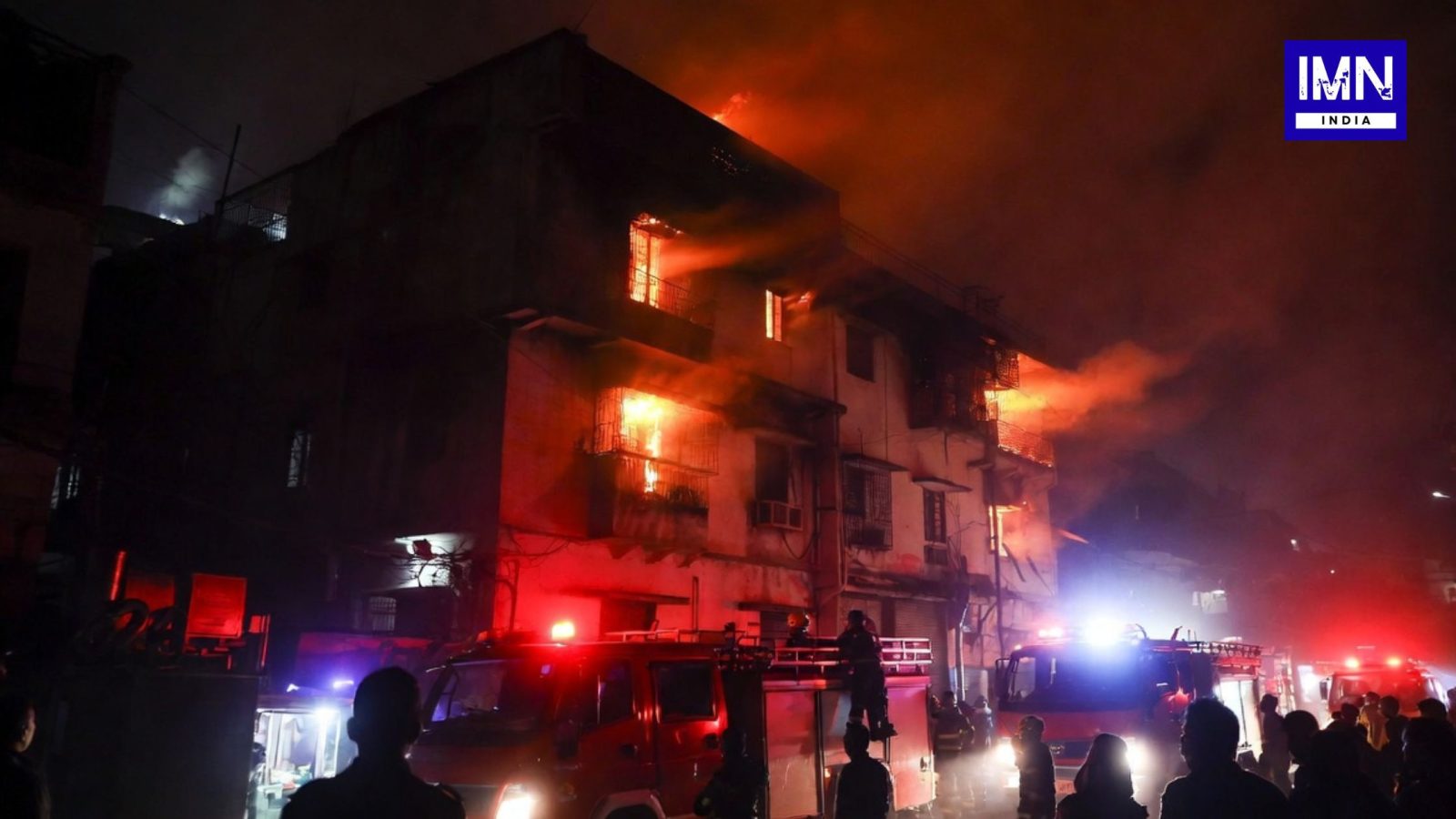
CM Yogi Adityanath orders SIT probe after investigators reveal the Aliganj building was residentially sanctioned but allegedly ran commercial operations without fire safety clearances raising serious questions about regulatory failure and administrative negligence.
The Lucknow Aliganj fire SIT probe ordered by Uttar Pradesh Chief Minister Yogi Adityanath has brought a deeply troubling revelation to light the multi-storey building where 15 people lost their lives on Monday had been originally sanctioned for residential use, but was allegedly operating as a commercial establishment without the required permissions or fire safety clearances.
As investigators dig deeper, the tragedy is emerging as a story not just of one building’s violations, but of a systemic collapse in regulatory oversight that allowed illegal commercial operations to thrive in a residential structure until lives were lost.
Lucknow Aliganj Fire SIT Probe What Investigators Found
Officials confirmed that the building in Aliganj housed several establishments including educational institutions and business operations despite holding only a residential sanction from civic authorities.
Under Indian building regulations, converting a residential property to commercial use requires explicit approval from the local municipal body, a fresh fire NOC, structural safety clearance, and compliance with an entirely different set of operational norms. None of these, according to preliminary findings, appear to have been in place.
Investigators are now working to establish exactly when the building’s usage changed, how it was allowed to continue, and whether anyone in the administrative chain was aware of or complicit in the violation.
The Night of the Fire
The fire broke out in the Aliganj building on Monday, rapidly escalating into a crisis as thick smoke spread through the structure and trapped occupants inside.
The building’s commercial usage with higher footfall, greater electrical load, and likely inadequate fire compartmentalisation may have significantly contributed to how quickly the situation turned fatal. Some occupants desperately attempted to escape through windows. Others waited for rescue, unable to navigate through smoke-filled corridors and stairwells.
Emergency personnel worked for hours, simultaneously evacuating the trapped and battling the blaze. By the time the fire was brought under control, 15 people had lost their lives making it one of Lucknow’s deadliest fire tragedies in recent years.
Lucknow Aliganj Fire SIT Probe What the Panel Will Examine
CM Yogi Adityanath’s SIT has been given a clear three-part mandate:
Cause of fire Was it an electrical fault, short circuit, or operational negligence inside the commercial establishments?
Building approvals Were proper sanctions in place? How did a residentially approved building convert to commercial use without detection?
Accountability Who bears responsibility building owners, commercial operators, or the government officials who failed to act?
The SIT’s findings will determine whether criminal charges are filed and against whom. Given that the alleged illegal commercial use of the building was likely visible and ongoing over an extended period, a key question for the probe will be: why was no action taken before the fire?
H2: Officials Under Scrutiny
Reports indicate that several government officials are already under the scanner as part of the Lucknow Aliganj fire SIT probe. In cases involving illegal building conversion at this scale, the failure to act typically implicates multiple administrative layers the local municipal office responsible for building use certificates, fire department officials tasked with conducting safety inspections, and district administration officials responsible for identifying and acting on violations.
If the SIT establishes that warnings were ignored, inspections were not conducted, or violations were deliberately overlooked, accountability could extend well beyond the building’s owners and operators.
A Systemic Problem Across India’s Cities
The Lucknow Aliganj fire is not a standalone incident. Across India’s rapidly urbanising cities, the illegal conversion of residential buildings into coaching centres, offices, and commercial establishments has become a widespread and dangerous norm.
These buildings are not structurally designed for commercial footfall. They carry inadequate electrical infrastructure, lack proper fire exits, and almost universally operate without fire suppression systems or emergency evacuation plans. According to the National Crime Records Bureau (NCRB), fire accidents claim thousands of lives in India every year, with a significant proportion linked to commercial establishments operating in violation of fire safety norms. You can refer to the NCRB’s annual report on accidental deaths and suicides for the full data.
What makes this pattern dangerous is also what makes it preventable. Illegal conversions are visible, gradual, and known to local authorities. The failure to act on them until lives are lost is a systemic failure that demands systemic solutions regular audits, real-time monitoring of building usage, and penalties for violations detected before a tragedy, not after.
For a detailed look at India’s fire safety norms and the National Building Code, refer to the Bureau of Indian Standards.
What Comes Next in the Lucknow Aliganj Fire Case
Authorities have announced that a review of similar properties in Lucknow residential buildings allegedly operating commercially will be undertaken to identify and act on violations before another tragedy occurs. Fire safety compliance checks are expected to be intensified across the city in the coming weeks.
For the families of the 15 victims, no enforcement action after the fact will undo their loss. The demand shared by every citizen who lives or works in a building like the one in Aliganj is simple: enforce the law before the fire, not after it.
Read More News: Bus Overturns on Ahmedabad-Dholera Expressway, One Woman Killed, Several Injured












Leave a comment