


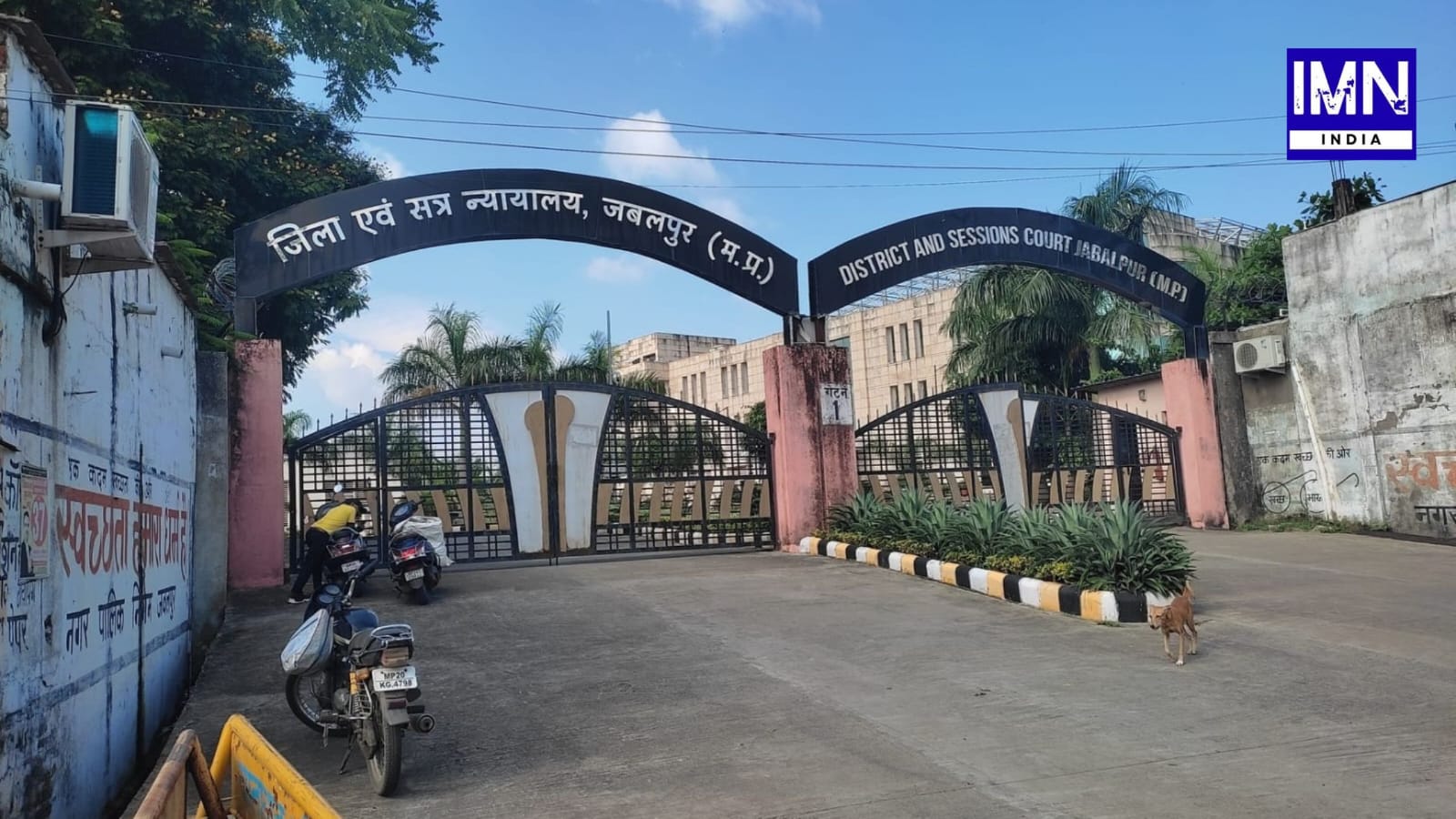
The Madhya Pradesh High Court has firmly stated that judicial officers cannot be threatened or pressured over the verdicts they deliver, calling such conduct a serious threat to the independence of the judiciary. The court’s remarks came as it took suo motu cognisance of death threats and communal abuse directed at Additional District Judge Tabassum Khan following her ruling in a 2022 mob lynching case.
A Division Bench comprising Justices Vivek Agarwal and Avnindra Kumar Singh heard the matter and made it clear that disagreement with a court’s decision can never justify intimidating the judge who delivered it. The bench observed that such attempts strike at the very foundation of the justice delivery system and cannot be allowed to go unchecked. As part of its order, the High Court directed the state’s Director General of Police and the Additional Chief Secretary (Home) to submit detailed reports within three days, outlining the steps taken to address the threats and protect the judge.
The controversy stems from a judgment delivered by Judge Tabassum Khan on June 12, in which she convicted 14 individuals and sentenced them to life imprisonment in the Seoni Malwa mob lynching case. The case involved a violent attack in which a man was killed and another injured, with the assault reportedly linked to allegations of cattle smuggling. The verdict, seen as a significant step in holding perpetrators of mob violence accountable, was followed swiftly by a backlash on social media.
In the days after the judgment, several videos began circulating online in which unidentified individuals allegedly threatened the judge and made communally charged remarks against her. The nature of the threats raised serious concerns about the safety of judicial officers who deliver verdicts in sensitive and communally charged cases. Taking cognisance of the growing threat, the Cyber Cell under the Ministry of Home Affairs stepped in to initiate action against those responsible for the online threats. Simultaneously, the Seoni Malwa police registered a First Information Report (FIR) and launched an investigation aimed at identifying and tracking down the individuals behind the threatening and abusive content.
During the course of the hearing, representatives of the state government informed the High Court that enhanced security arrangements had already been put in place for Judge Khan’s protection. This includes the deployment of additional security personnel, the assignment of a Personal Security Officer (PSO), and continuous monitoring of the situation by senior police officials to ensure her safety is not compromised.
Despite these assurances, the High Court has sought a more detailed status report on the ongoing investigation into the threats, as well as a comprehensive account of the protective measures being implemented for the judge’s security. The bench’s insistence on a time-bound response underscores the seriousness with which the judiciary is treating the matter, signalling that threats against judicial officers will not be tolerated or dismissed lightly.
The case has once again brought into focus the broader issue of judicial independence in India, particularly in politically and communally sensitive matters. Legal experts have long argued that the ability of judges to deliver verdicts without fear of retaliation is fundamental to the rule of law, and incidents like this test the system’s capacity to protect those who uphold it.
The matter has been listed for further hearing on July 9, when the High Court is expected to review the reports submitted by police and government authorities and assess whether additional protective or legal measures are required.
The Madhya Pradesh High Court’s firm stand sends a clear message that threats against judges will not be tolerated, reinforcing the judiciary’s independence in the face of intimidation. With action already underway and a follow-up hearing set for July 9, the case will be closely watched as a test of institutional accountability in protecting judicial officers.
Also read: Jacqueline Fernandez Withdraws Supreme Court Plea in ₹200 Crore Money Laundering Case
Follow for more updates: www.instagram.com/imnindia.news/
















Leave a comment