


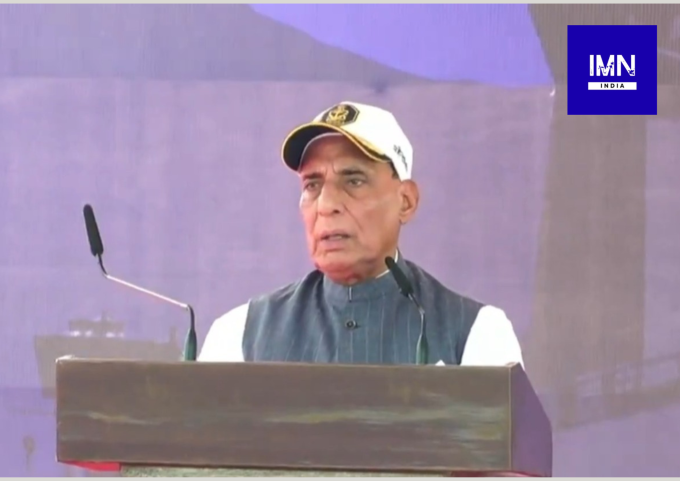
The Defence Acquisition Council (DAC) has approved Defence Acquisition proposals worth ₹52,000 crore to significantly enhance the operational capabilities of the Indian Armed Forces. The approvals cover a wide range of advanced military platforms and weapon systems for the Indian Army, Navy and Air Force, reinforcing India’s focus on strengthening national security and accelerating defence modernisation.
The Defence Acquisition Council, chaired by Defence Minister Rajnath Singh, approved the capital procurement proposals as part of the government’s continued efforts to improve combat readiness amid evolving regional and global security challenges. Many of the approved systems are expected to enhance surveillance, air defence, anti-drone capability and battlefield effectiveness across all three services.
Indian Army to Receive Advanced Air Defence and Anti-Tank Systems
Among the major approvals for the Indian Army are the procurement of the AKASH TARANG Anti-Unmanned Aerial Vehicles Electronic Warfare System, Man Portable Anti-Tank Guided Missile (MPATGM) Systems, Medium Range Surface-to-Air Missile (MRSAM) Weapon System, Very Short Range Air Defence System (VSHORADS), Active Protection Systems for Tanks, and Jet-Based Kamikaze Drone Systems.
According to the Defence Ministry, the AKASH TARANG Electronic Warfare System will provide effective protection against hostile unmanned aerial vehicles and drone threats. The MPATGM system is expected to strengthen the infantry’s ability to neutralise enemy armoured vehicles and mechanised formations with greater precision.
The Medium Range Surface-to-Air Missile system will improve India’s capability to counter aircraft, helicopters, drones and other stand-off aerial threats. Meanwhile, the Jet-Based Kamikaze Drone System will provide greater lethality, survivability and electronic warfare capability while remaining cost-effective for battlefield operations.
India has significantly expanded its anti-drone and air defence capabilities in recent years, particularly after the growing use of unmanned aerial systems in modern conflicts worldwide. The latest procurement reflects the armed forces’ increasing emphasis on integrated air defence and electronic warfare.
Indian Navy and Air Force to Strengthen Surveillance Capabilities
For the Indian Navy, the DAC approved the procurement of Multi-Influence Ground Mines and Naval Shipborne Unmanned Aerial Systems, as well as the establishment of a Land-Based Testing Facility for Electric Propulsion Systems. These acquisitions are expected to enhance maritime surveillance, underwater warfare preparedness and future naval propulsion technologies.
The Indian Air Force received approval for the procurement of Fixed-Wing High-Altitude Pseudo-Satellite (FW-HAPS) platforms along with several other proposals. These high-altitude systems are designed to provide persistent Intelligence, Surveillance and Reconnaissance (ISR), telecommunications support and remote sensing capabilities over extended periods.
Defence experts believe such platforms can complement satellites by offering continuous monitoring at a comparatively lower operational cost while improving situational awareness during military operations.
Defence Acquisition Reflects India’s Modernisation Drive
The latest Defence Acquisition approvals are part of the government’s broader strategy to modernise the armed forces through advanced technology and greater self-reliance. Over the past few years, India has accelerated defence reforms under the Atmanirbhar Bharat initiative by encouraging indigenous design, development and manufacturing of military equipment while reducing dependence on imports.
Several recent Defence Acquisition Council approvals have prioritised domestically developed weapon systems, electronic warfare platforms and surveillance technologies. This approach supports India’s long-term objective of building a robust domestic defence manufacturing ecosystem alongside improving operational readiness.
The government’s sustained investment in advanced military technologies comes amid rapidly evolving warfare, where drones, electronic warfare, artificial intelligence and network-centric operations are becoming increasingly important. Modernising all three services with integrated capabilities is viewed as a key priority for maintaining strategic preparedness.
The newly approved procurement proposals are expected to strengthen India’s overall defence posture by enhancing the operational effectiveness of the Army, Navy and Air Force while equipping them with next-generation technologies to address emerging security challenges across land, sea and air domains.
Also read: India and Pakistan Exchange Prisoners List Under 2008 Consular Pact
Follow for more updates: http://www.instagram.com/imnindia.news/














Leave a comment